Rail Freight
RAIL TRANSPORT
Rail freight at Euro24 is a transport solution based on high capacity, dedicated to handling medium and large mass and volume shipments. Our operations focus on managing Full Container Load (FCL) and Less than Container Load (LCL) units, with particular emphasis on efficiency on the New Silk Road and within internal transport corridors.
FCL/LCL
Handling of full container loads and smaller shipments (LCL) in a door-to-door system.

Cost Stability (BAF)
Fixed freight rates, resistant to sudden fuel surcharges (BAF).

Transcontinental Network
Comprehensive transport services (import and export) on the China – Poland route.
What does our service include?

Insurance
Option to extend cargo insurance coverage, tailored to the goods’ value, commodity type, and route distance.

Customs Clearance
Support in export and import formalities to ensure seamless flow and prevent delays.

Tailored Solutions
Customized logistics services scaled to your specific operational requirements.

Urgent shipments
Priority transit options for time-sensitive shipments.

Fiscal Customs Clearance
VAT-deferred clearance under Procedure 33A in applicable EU jurisdictions.

Trusted Partnerships
Direct cooperation with carriers, terminal operators, and global agents.

Comprehensive Service
Full management of the logistics chain, from origin pickup to final destination delivery.

Shipment Security
Use of verified transport lines and safety protocols to ensure cargo integrity throughout the entire transit.

Professionalism
A team of qualified experts with extensive experience in the rail freight industry.
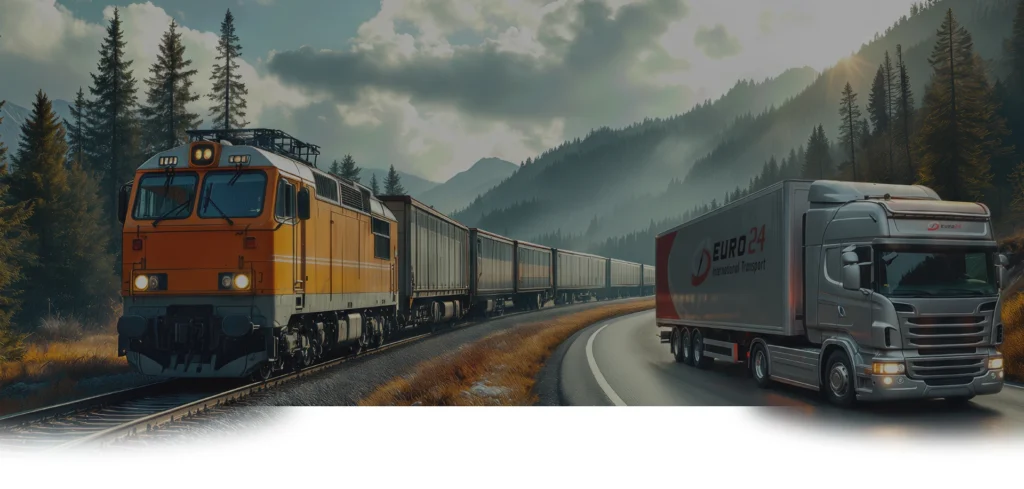
China Railway Express!
Poland holds a strategic position on the main China Railway Express corridor, also known as the New Silk Road, serving as a key inland gateway for cargo moving between Asia and the European Union.
The Małaszewicze terminal currently handles approximately 90% of all freight trains traveling from China to the EU, making it one of the most critical dry ports of global significance. The scale of operations in Małaszewicze enables us to efficiently manage customs procedures and ensure rapid cargo distribution across Europe immediately upon crossing the EU border.

Rail Freight
Rail transport is most effective when supply chain continuity, schedule stability, and the capacity to move large volumes over long distances are the top priorities. For many Asian importers, this solution maintains a steady flow of goods while keeping logistics costs under control.
Unlike road transport, rail freight relies primarily on electric traction, which eliminates variable fuel surcharges (BAF). This allows for maintaining fixed rates in medium-term contracts and precise budget planning without the risk of sudden oil price spikes. By choosing rail, you gain resilience against market fuel price fluctuations.
An additional advantage of rail transport is its predictability. Freight trains operate on fixed schedules, allowing companies to plan deliveries and production with greater accuracy. In many sectors, particularly manufacturing and retail, this supply chain stability is just as critical as the transit time itself.
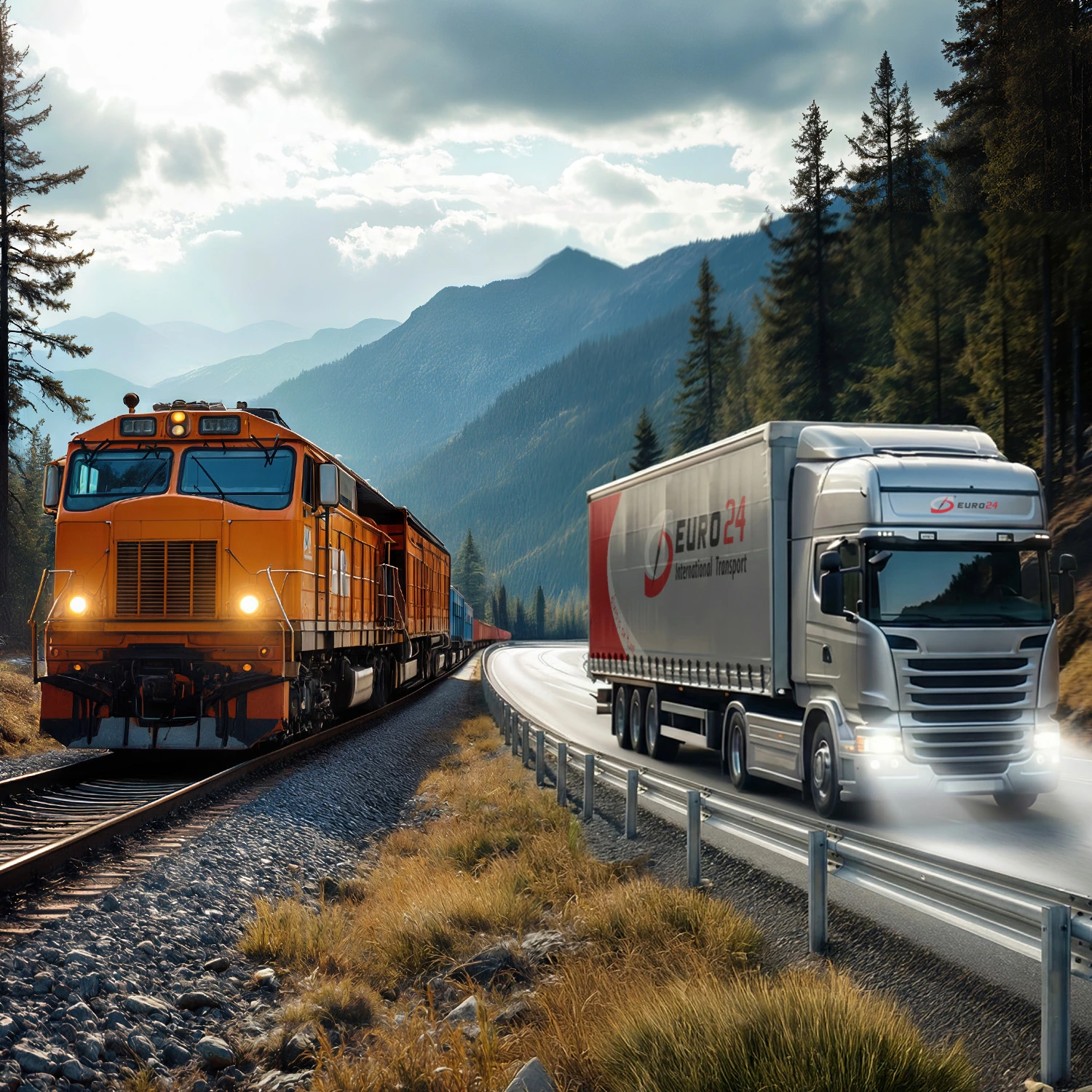
Freight Types Comparison
| Parametr | See Fracht | Rail Fracht | Road Drogowy | Air Lotniczy |
|---|---|---|---|---|
| Transport time | Very long | Long | Short | Very Short |
| Cost (relative) | Low | Low / Medium | Medium / High | High |
| CO2 Emission | Low | Low | High | Very high |
LET US QUOTE YOUR SHIPMENT
Our experts will prepare a precise calculation with an optimal plan tailored to your needs.


We are available for you from 8:00 AM to 5:00 PM, Monday to Friday

Incoterms Rules
We provide advisory on selecting the optimal Incoterms for rail transport, ensuring they align with the specific transaction, commodity type, and transport route. We precisely define the obligations of each party, logistics cost allocation, and the exact risk transfer point between the seller and the buyer.
FCL (Full Container Load)
20′ and 40′ containers on China–Europe corridors and within the EU. Cargo is transported from the origin terminal to the destination terminal without transshipment. The entire container is dedicated to a single shipper, providing a solution for large volumes where maximum space utilization and reduced handling are priorities.
LCL (Less than Container Load)
Consolidation of smaller shipments into a single container, enabling the transport of goods from multiple shippers within one loading unit. This model allows for efficient container capacity management and significantly reduces transport costs for lower-volume consignments.

Cost Stability
Rail freight costs are optimized based on scale and distance. On routes exceeding 1,000 km, rail provides a reduction in unit costs compared to road transport, offering stable freight rates that are not subject to volatile market fluctuations.
The New Silk Road
The most important land-based alternative to sea freight, connecting major production centers in China with EU markets. By utilizing integrated rail networks within the China Railway Express, average transit times range between 12 and 18 days, ensuring a fast capital turnover compared to maritime transport.