Blog
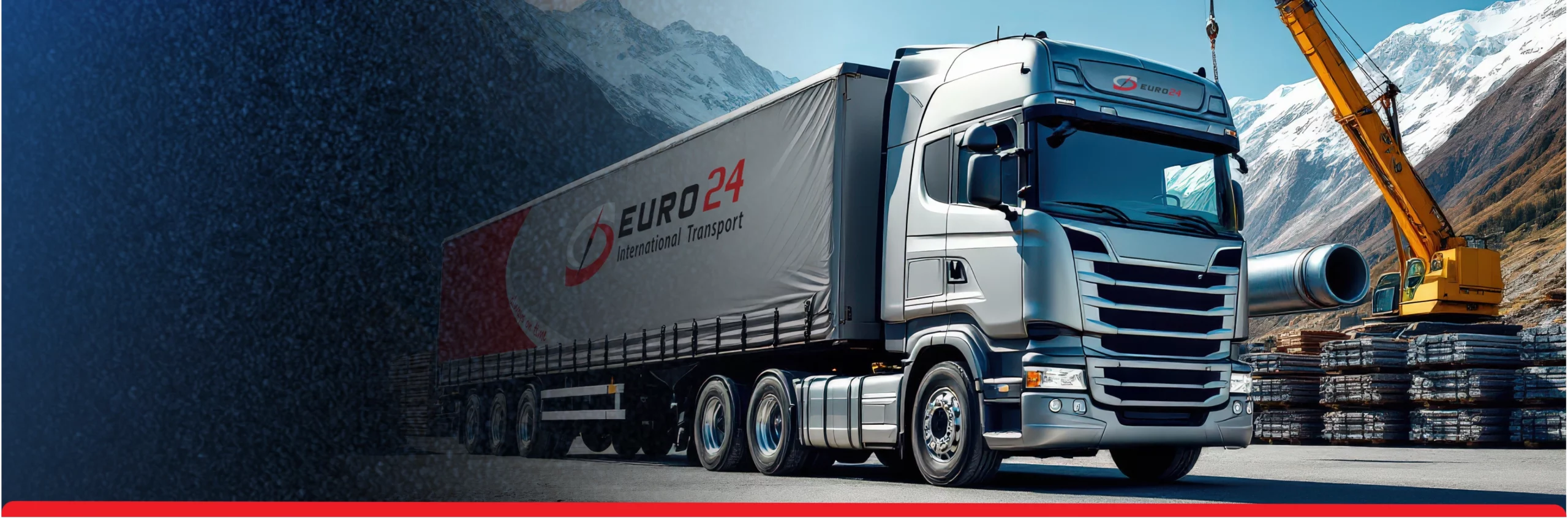
Transport of construction materials without delays: modern logistics for the construction industry
The logistics market for the construction industry in Europe is operating at full speed – but in a more demanding environment than a few years ago. Tight schedules, rising cost pressures, and the need to coordinate multiple teams mean that efficient transport of construction materials has become a key success factor for any project. Construction logistics is not just a support function – it is a real source of competitive advantage. Just-in-time delivery is now a standard, ensuring that materials arrive at the construction site without delays and preventing costly downtime.
The pace of project execution is high, and schedules are packed – therefore, choosing a transport company for heavy construction elements is a decision that can make or break the entire timeline. Increasingly, project success depends on synchronising deliveries with assembly stages while minimising storage space on site. Even a minor delay in a single shipment can halt subsequent crews, so meticulous delivery slot planning and rapid response to changes have become the industry norm. Added value comes from proactive communication and 24/7 shipment tracking, which give contractors and investors peace of mind. The growing role of prefabrication and “green” retrofits only raises the bar for logistics, requiring greater precision and fleet flexibility. In such an environment, a transport partner is not just a carrier but a co-author of the schedule, keeping the workflow dynamic.
Need reliable construction materials transport?

Transport of construction materials in Europe – who carries the most?
Transport of heavy and oversized loads for construction – specialised solutions
Road transport in Europe has now reached historically high volumes of construction material shipments. According to Eurostat data, in 2024 total freight movement in the EU exceeded 13.1 billion tonnes and 1,867 billion tonne-kilometres, illustrating the scale of the industry’s logistical challenges. After the post-pandemic rebound, the sector slowed briefly (by 3.2% between 2022-2023) before returning to a modest growth path the following year (0.6%). There are also clear shifts in demand: the transport volume of “base metals” (steel, iron, aluminium) fell by just over 8%, while aggregates, cement, and mineral insulation continue to grow, driven by urbanisation, environmental regulations, and general infrastructure development. [1]
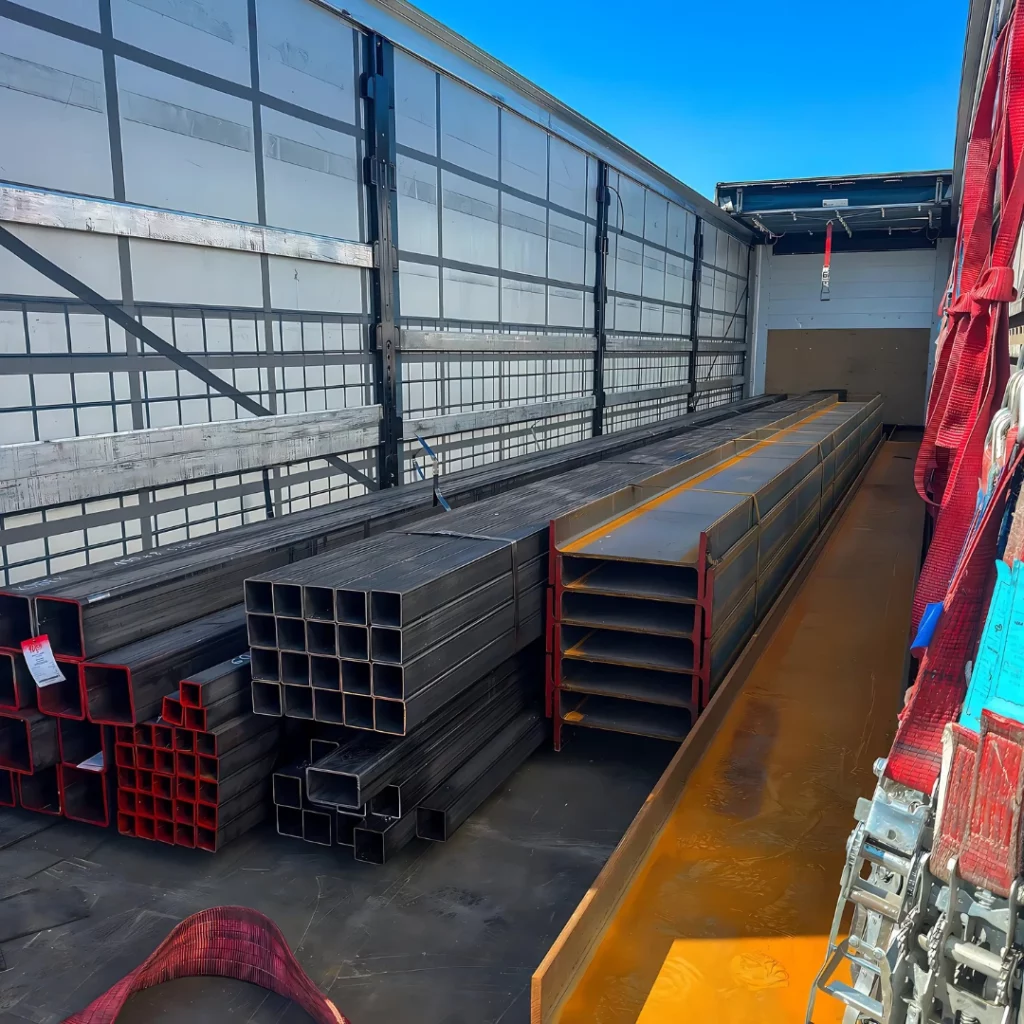
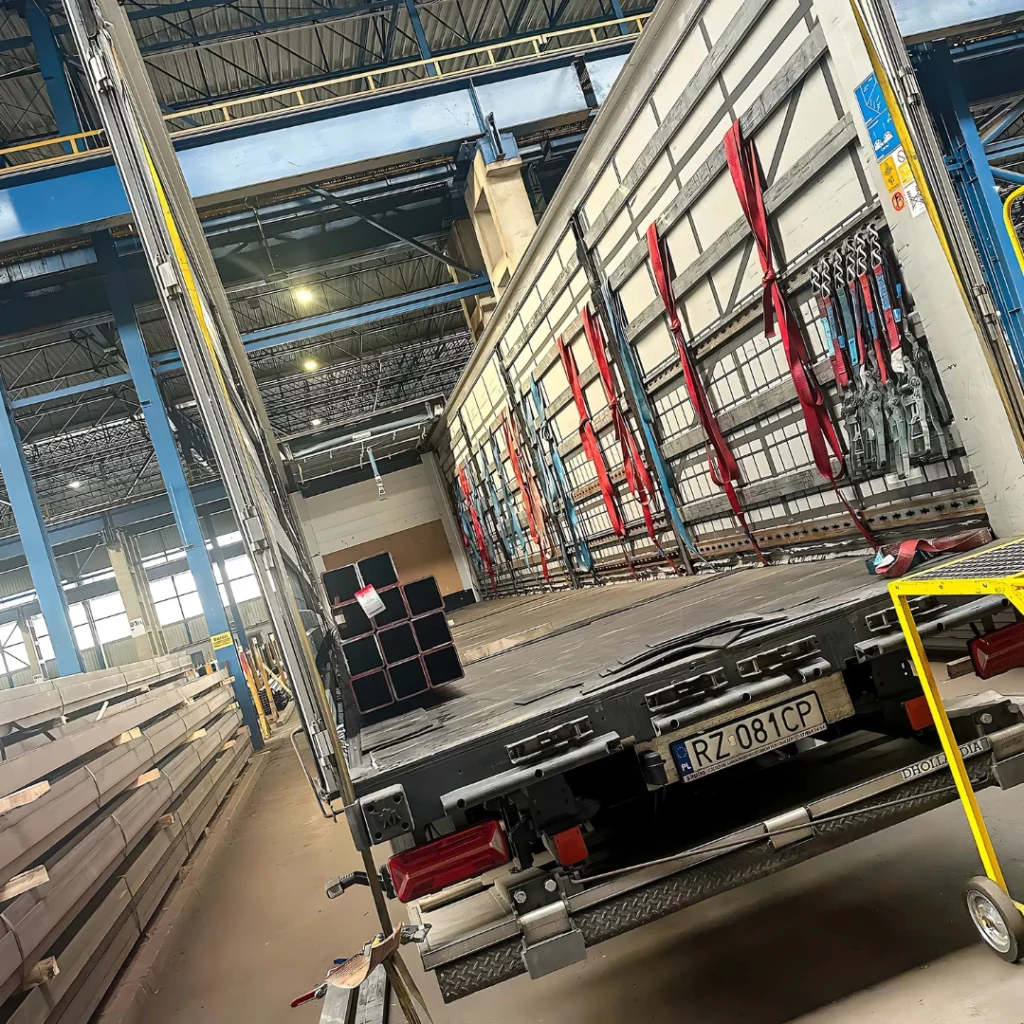
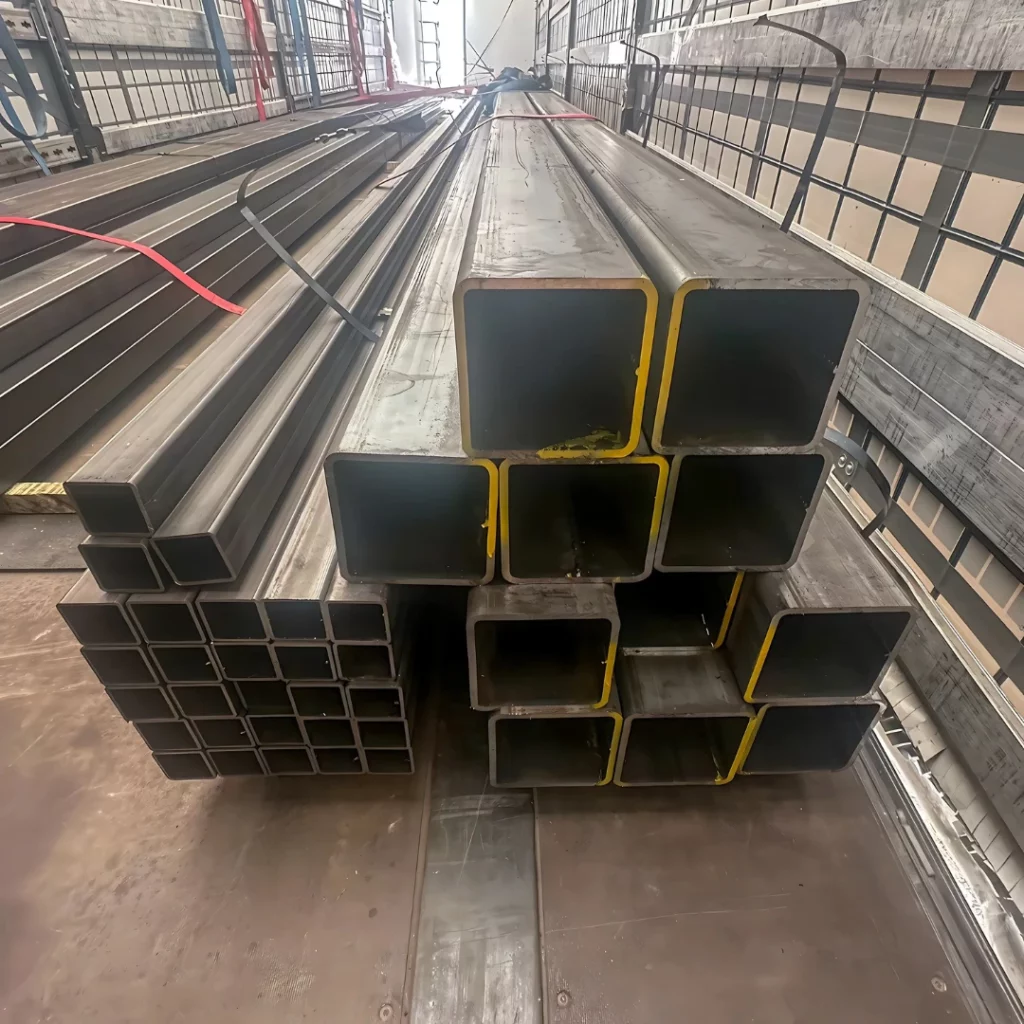
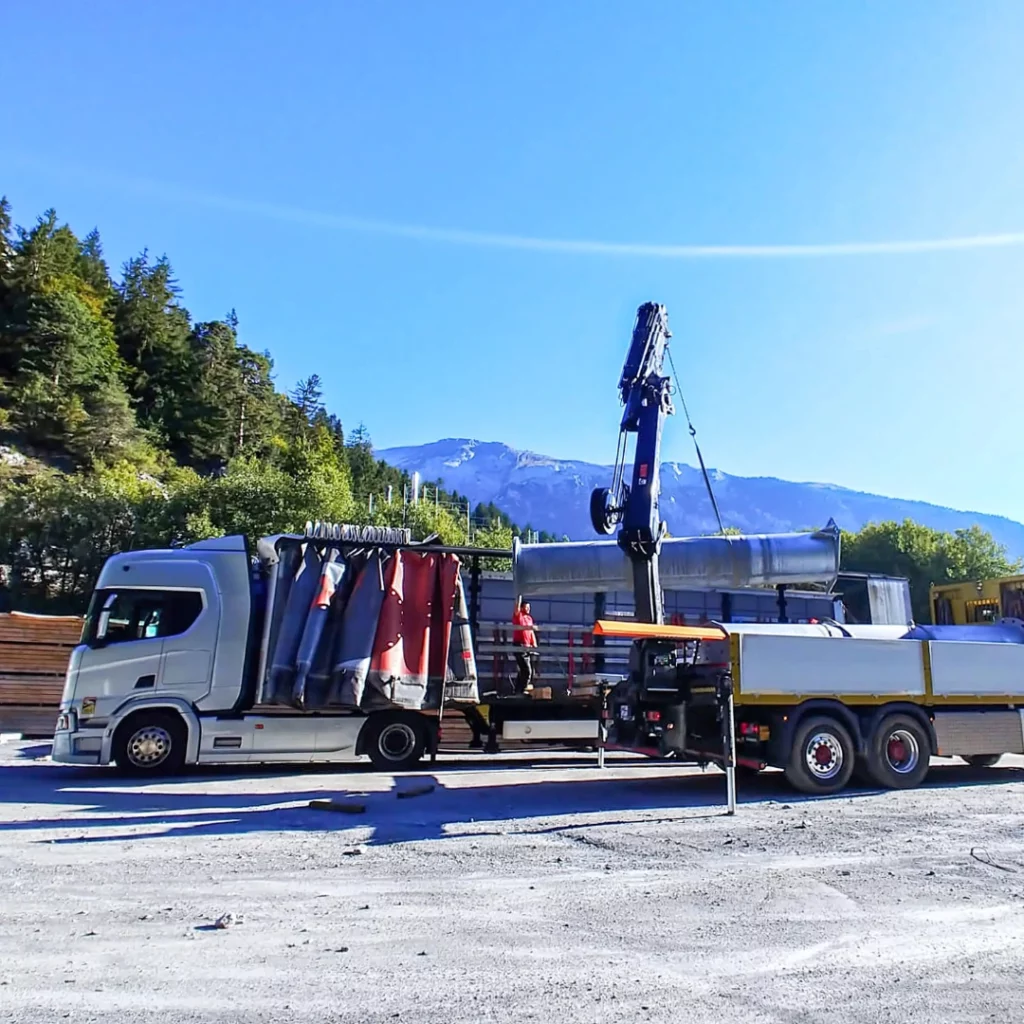
For contractors, this means increasing competition for timely transport slots and a rising demand for oversized services that allow heavy or irregular elements to be delivered exactly when needed on site. Euro24 meets these needs by transporting heavy and irregular components using trucks equipped with hydraulic lifts and certified securing systems. This enables safe loading and unloading even without ramps, including in challenging terrain, ensuring the process is fast and without site downtime. [2]
Construction freight Poland-Germany – Germany’s role as a key market
In this logistics landscape, Germany, France, Spain, Italy, and Poland dominate, together generating nearly two-thirds of the EU’s international construction material transport. Germany – responsible for 22.5% of the EU volume – acts as a key hub for importing and transiting heavy construction materials and structural components, confirming its strategic importance in EU logistics. In 2024, it was the country of origin or destination for almost half of the largest intra-EU road freight flows, making it a critical link in the circulation of construction materials across the continent. [3]

Poland as a strong player on the market
The Polish market plays a vital role as a hub in the European supply chain. Euro24’s core expertise lies in construction freight on the Poland-Germany route, one of the most important corridors for heavy construction materials and prefabricated elements. Experience in servicing this direction ensures smooth and timely execution. Equally efficient is the company’s handling of construction material transport to France and the Benelux countries, ensuring uninterrupted supply throughout Western Europe. [4]
OVERSIZED TRANSPORT
Euro24 provides specialised transport of heavy construction materials using hydraulic lifts, enabling fast and safe loading and unloading in any conditions. This solution shortens operation times and minimises cargo damage risk – crucial for tight construction schedules. Thanks to mobile loading platforms, deliveries are also made to locations without permanent ramps, ensuring uninterrupted construction progress.

The most common challenges in Europe’s construction industry – rising costs, labour shortages

Speed and flexibility of deliveries are only part of the challenge – construction logistics today also struggles with labour shortages and rising service costs. Schedules slip because it is increasingly difficult to assemble crews and maintain work pace. A productivity barrier has persisted for years – despite investments in equipment and technology, efficiency is not improving. On top of this, persistent cost growth limits demand and makes budgeting harder. [5]
Growing labour gaps, crowded schedules, and cost inflation create daily pressure in construction transport. As an international construction freight operator, Euro24 faces these challenges daily – and knows that stable logistics and perfect delivery coordination are key to overcoming them. Timely and predictable shipments of materials and prefabricated elements, supported by advanced route planning and 24/7 monitoring, help minimise the risk of work crew downtime and costly delays.
Falling labour productivity – can it be improved?
Over the past quarter-century, labour productivity in EU construction has fallen by 15%, meaning one labour hour today delivers fewer completed square metres than in the late 1990s. This translates directly into higher hourly labour costs, longer schedules, and pressure to hire additional crews. In a more optimistic scenario, a 20% productivity increase would reduce labour needs by as many as 2.5 million workers, easing labour shortages without resorting to wage revolutions. To achieve this, the construction sector increasingly turns to solutions such as prefabrication and greater automation, which shorten and optimise on-site work time. [6]


Unfinished projects – wasted potential
The long-standing productivity crisis in the sector has turned into an acute labour deficit. In March 2024, over 30% of contractors in the EU admitted they could not complete all orders due to staff shortages – directly impacting site logistics. The domino effect is obvious – schedules extend, the risk of contractual penalties increases, and some investors delay new project starts, fearing a shortage of crews for installation or prefabricated module assembly. In many regions, a backlog of contracts is growing, requiring not necessarily more hands on deck but better organisation and an efficient supply chain. [7]
Rising prices – a nightmare for investors
The combination of low productivity and labour shortages translates directly into rising construction service costs. The EU’s construction service cost index rose from 100 in 2000 to nearly 250 in 2024 – an increase of around 150%. Rising wage rates, higher energy prices, and the risk of delays are often factored into contractor bids. As a result, some developers and municipalities reduce project scope or stretch them over time. For contractors, this means the challenge of maintaining margins on indexed contracts; for investors – the need for strict budget control and minimising extra costs such as equipment downtime or emergency material deliveries. [8]

CONTRACT TRANSPORT
Contract transport at Euro24 means certainty that construction materials will always arrive on time – regardless of project scale. The company offers cyclical deliveries based on long-term contracts and schedules tailored to each stage of site work.

The future of the industry amid major changes – trends, technologies, investments
With costs rising, productivity stagnating, and labour availability falling, the construction market has no choice – it must seek advantages in organisation and technology rather than “adding more people.” In response, the European construction sector is entering a decade of significant change, shifting focus from traditional raw material transport, through the dynamic growth of prefabrication, to intensive investment in digital tools and process automation on construction sites. On the one hand, road freight in the EU is growing again, with Germany, France, Spain, Poland, and Italy generating nearly two-thirds of regional tonnage. On the other – new growth drivers are emerging: projected double-digit construction growth in Poland, Sweden, and Ireland in 2025-2027 and a strong upward trend in the global modular construction market. [9]
Logistics without delays
Transport in the construction industry allows no compromises. Precision matters, from on-time delivery of heavy materials and prefabricated elements to full compliance with quality requirements and the pace of work on site. A logistics partner who understands the specifics of projects and the pressure of meeting deadlines ensures smooth execution and minimizes the risk of costly delays.
Discover how we can support your business.

It is in this environment that Euro24 operates, tailoring its services to the pace and demands of modern construction. The company provides express transport of construction materials with full cargo tracking, enabling precise planning and supply chain optimisation. Thanks to 24/7 support from its Monitoring Department, investors gain real-time insight into transport progress, location, and the assurance that any unforeseen issues will be addressed immediately – ensuring deliveries arrive as planned, even in case of breakdowns. This cooperation model allows clients to execute projects in sync with construction technologies and market demands, minimising downtime and optimising costs at every stage.

Steel element transport – the Central European logistics corridor
Although in 2024 the transport of “non-ferrous metals” fell by 8.1% in tonnes and 6.4% in tonne-kilometres, Europe’s steel backbone still rests on the north-south axis, from the Baltic to the Alps. Poland accounts for around 20% of EU transport work, with nearly two-thirds being international – making it a key link between Central and Western Europe. In such a scale, precision planning is crucial – strict delivery schedules and real-time cargo monitoring minimise downtime and costs in complex infrastructure projects. Euro24 handles transport along strategic logistics corridors, delivering steel and other heavy construction materials exactly when needed. The company’s experience in international transport ensures schedule stability, even under heavy traffic and tight deadlines. [10]

Prefabrication & modular transport – optimised loads, global boom
The logistics of prefabricated elements in Europe’s construction market has evolved from a niche to a fully-fledged segment of global construction. In 2024, its global value exceeded USD 104 billion, and over the next decade it may double. In Poland, this market has grown steadily in recent years, from around PLN 4.8 billion to over PLN 5 billion. This trend forces logistics to adopt a “tailor-made” approach – wooden and concrete prefabricates are delicate and require specialist transport, often using mega-trailers with advanced securing systems and hydraulic tail lifts. This is exactly the technology Euro24 employs, delivering heavy materials in a just-in-time formula. This enables quick and safe loading and unloading, even in locations without ramps. [11]

Digital logistics – data at your fingertips
Rising investor expectations are driving the digitalisation of construction logistics, enabling precise cargo tracking and rapid adaptation to changes. Since the start of the 21st century, the value of software in the European construction sector has nearly doubled, translating into higher transport standards. Today’s logistics require vehicles equipped with modern systems for constant load monitoring and drivers working in safe and comfortable conditions. In response to these demands, Euro24 provides clear communication on shipment status through detailed updates on each stage of transport. This combination of technology and fleet quality allows for swift reactions to schedule changes and ensures on-time deliveries. [12]

Investment in capital – greater in Europe than in the US
Growing competition and cost pressure are forcing contractors to invest more heavily in equipment to shorten completion times and increase productivity. In the EU, construction companies now allocate an average of 11% of value added to new machinery – almost double the share in the US. These investments include both machines used directly in construction and solutions that improve the transport and assembly of elements on site. While full automation is progressing gradually, mechanisation and better process organisation are already delivering measurable results. When every minute of machine operation counts, Euro24 synchronises deliveries with assembly schedules, minimising crane and other machinery idle time, while real-time shipment monitoring reduces downtime and related costs. [13]
MONITORING TRANSPORT
Euro24 offers 24/7 oversight of orders through a dedicated Control Tower department, which continuously monitors transport progress, instantly detects any deviations from the plan, and allows immediate reaction in crisis situations. For construction site deliveries, this means full control over timeliness and safety – from loading to unloading.

Renovations in sustainable construction – challenges and logistics needs
With rising costs and ongoing productivity challenges, green construction is becoming one of the sector’s key growth areas. This trend is the strongest driver of demand for efficient construction logistics: buildings are responsible for around 37% of CO₂ emissions in Europe, which is why decarbonisation of the sector has become a top public policy priority. According to the revised EPBD directive, from 2030 all new buildings must be zero-emission, and by 2050 the entire building stock must achieve a low carbon footprint. At the same time, member states will need to renovate 16% of the least energy-efficient non-residential buildings by 2030 and 26% by 2033, which in practice means increasing volumes of transports for insulation materials, joinery, HVAC systems and renewable energy installations. [14]
The trend is also visible in Poland, where in 2024 the number of buildings with environmental certificates rose by 15% compared to the previous year. According to EUROCONSTRUCT forecasts, the market may record double-digit growth over the next two years. This will translate into more deliveries within short time windows, greater demand for securing “last mile” deliveries, and more frequent use of vehicles with their own loading platforms in locations without fixed transshipment points. [15]
Construction freight with monitoring and just-in-time deliveries
EPBD-compliant renovations involve hundreds of thousands of material shipments – from insulation and joinery to renewable energy installations – delivered within strictly defined time slots, often to locations without ramps or logistics facilities. In such conditions, the carrier must combine punctuality with flexibility to maintain continuity of work on site. Euro24 meets these requirements by providing a just-in-time transport model for construction materials, 24/7 monitoring, and precise international delivery planning, ensuring the safe and timely arrival of components essential for green modernisations across Europe.
JUST IN TIME
In construction, where delays in delivering key materials can halt all work on site, the Just-in-Time model guarantees that everything arrives exactly at the agreed moment. Precise execution and rapid reaction to unforeseen changes are possible thanks to round-the-clock supervision of every transport by an experienced team. Such proactive management minimises the risk of downtime and keeps investment schedules on track without unnecessary costs.

Dynamic logistics in construction
The high pace and changing conditions mean that TSL services for construction must combine precise planning, flexibility and high delivery security. In this environment, operators who can integrate these elements into a single, coherent process gain an advantage: synchronising deliveries with assembly schedules, providing full shipment status visibility, reacting quickly to on-site changes, and handling unloading safely in demanding locations. Euro24 operates exactly in this way – combining precise planning, a reliable fleet and constant monitoring – so that clients can focus on completing their projects rather than solving logistics problems.
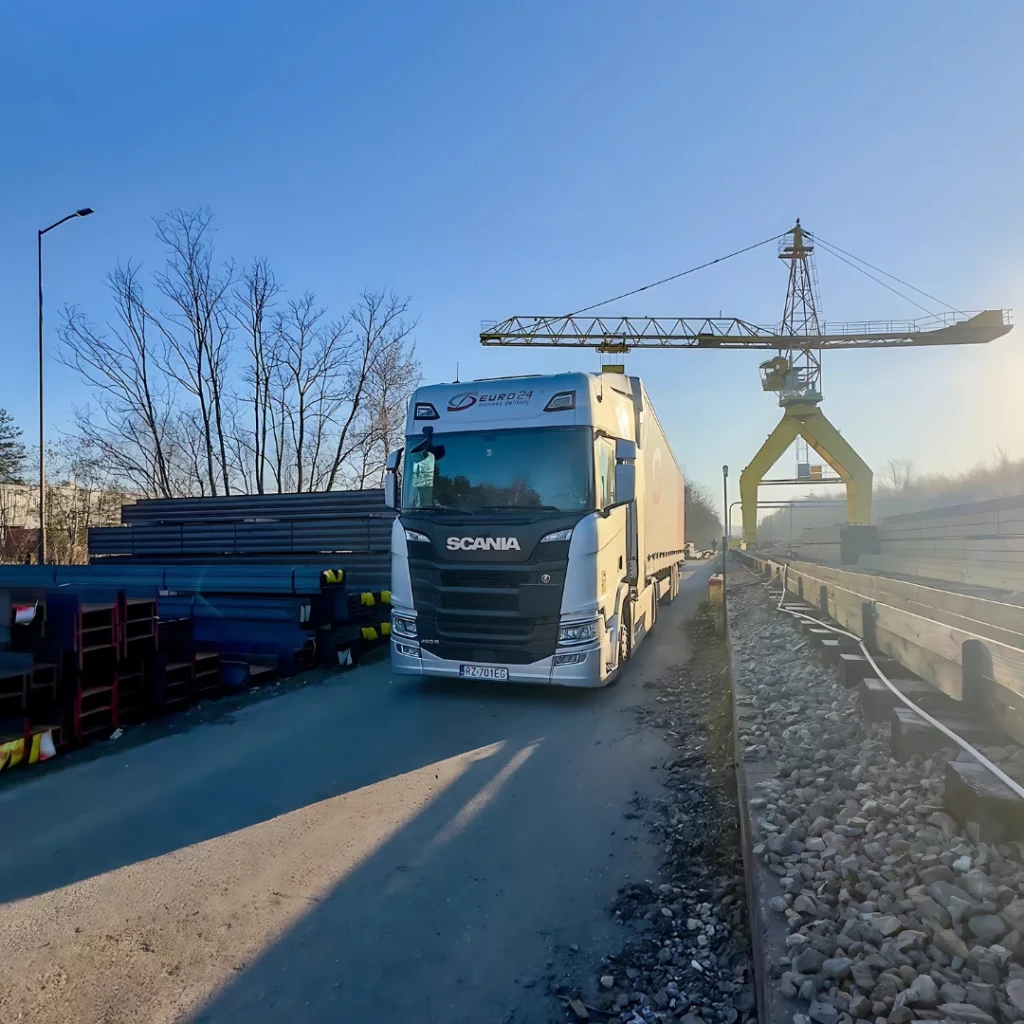
Growing demands in the construction industry – from maintaining work pace despite labour shortages, through coordinating multiple deliveries within short time windows, to efficiently managing material flow on site – mean that logistics in construction today is not just about providing adequate transport, but also one of the key factors determining project success. It is logistics that ensures workflow continuity, effective use of equipment, and avoidance of costly downtime. For this reason, choosing a partner who understands the realities of construction and can adapt transport to the project’s requirements is of great importance. In this respect, Euro24 combines specialist transport of heavy, delicate, and oversized loads with round-the-clock monitoring, 7 days a week, and flexible response to changes. Thanks to this approach, investors, contractors, and distributors can deliver projects according to plan, control costs, and maintain high work efficiency across Europe.
Construction logistics in practice – Frequently Asked Questions (FAQ)
1. How to organise the transport of construction materials abroad?
The simplest way, therefore, is to work with an experienced logistics partner. At Euro24, we not only take care of the entire process but also ensure smooth coordination – from route planning and organising the necessary permits (especially for oversized loads) to monitoring and consistently reporting delivery status.
2. What are the biggest challenges in international construction freight forwarding?
The biggest challenges are ensuring on-time deliveries, coordination with the construction schedule and dealing with unforeseen events en route. This is why digital construction logistics – including 24/7 GPS tracking – and fleet flexibility, both offered by Euro24, are crucial.
3. Do you handle the transport of heavy construction loads with unloading?
Yes, we specialise in transporting heavy and delicate loads such as concrete prefabricates, steel elements and modules. Many of our vehicles are equipped with hydraulic tail lifts, allowing fast and safe unloading directly at the construction site, even where there is no ramp access.
Need a partner to deliver your construction materials without delays?
Contact us – our experts will analyse your needs and prepare a tailored offer, guaranteeing timeliness and safety at every stage of transport.
Sources:
- Eurostat, Road freight transport statistics, June 2025, [accessed 2025-08-07]
- ING, Why the EU construction sector is steadily outperforming the US, May 2025, [accessed 2025-08-07]
- Eurogospodarka, Zielone budownictwo albo katastrofa. Ostatni moment, by nie przegrać przyszłości, [accessed 2025-08-07]
- EUROCONSTRUCT, Political and Economic Uncertainty Slows European Construction Recovery, June 2025, [accessed 2025-08-07]
- Precedence Research, Modular Construction Market Size and Forecast 2025 to 2034, [accessed 2025-08-14]