Blog
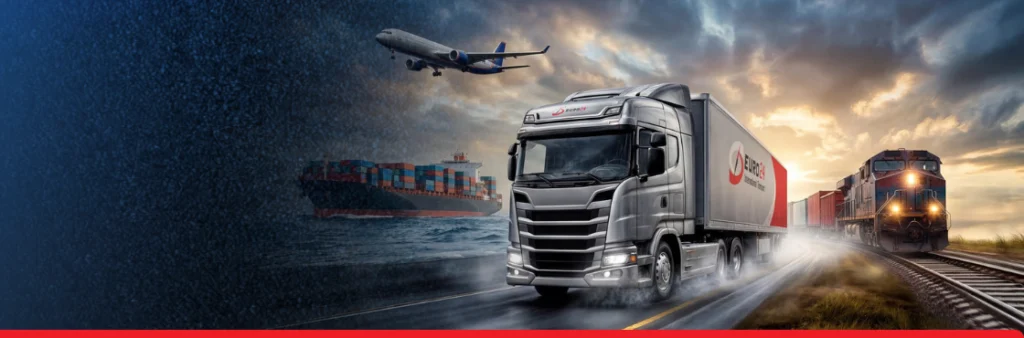
A comprehensive guide to freight types: road, air, sea, or rail. How to choose the right one?
Choosing a freight option is not just about the carrier’s price. It is a decision that affects your company’s entire logistics chain: from delivery time and cash flow to warehouse organization. If you have so far been shipping goods by road and are starting to consider shifting part of your volume to rail transport or sea freight, a natural question arises: will the savings on the rate come at the expense of longer transit times?
Transit time is not only the number of days in transit. It is the sum of many processes: cut-off, customs clearance, transshipments, warehouse slot availability, and the organization of last mile road transport. The most expensive mistakes in logistics are not the choice of transport mode itself, but incorrect assumptions about time, hidden costs, and process synchronization. Much more often they result from underestimated data, a lack of synchronization with production, or overlooking operational nuances. If you are considering rail transport or sea freight, it is worth carefully analyzing how an extended lead time will affect inventory levels and cash flow. If, on the other hand, you are planning air transport, it is crucial to understand the rules for calculating chargeable weight and the actual cut-off times at cargo terminals. And if the goal is cost optimization at a larger scale, shipping goods by sea freight or rail transport may be a logical step provided that the production schedule is synchronized with the transport plan. The cheapest transport is the one that is well planned. And good planning begins with asking the right questions.
| FTL / LTL | FTL (Full Truck Load): a full vehicle for one shipper, the fastest and safest option. LTL (Less than Truck Load): groupage, your cargo travels together with other shipments. Cheaper, but with a higher number of transshipments. |
| FCL / LCL | FCL (Full Container Load): a full container for one customer. LCL (Less than Container Load): cargo consolidated with other shippers. |
| JIT | JIT (Just in time): a production and logistics management concept based on delivering raw materials, components, or goods exactly at the moment they are needed in the production or sales process, not earlier and not later. |
| Chargeable weight | In air transport, the cost is calculated based on the higher of two values: the actual weight (kg on the scale) or the volumetric weight calculated from the cargo dimensions. If the shipment is light but takes up a lot of space on the aircraft, you pay for the space rather than the actual kilograms. |
| Lead time | The total time required to complete the logistics process from the moment an order is placed or a shipment is prepared to the moment the goods are delivered to the recipient. It includes all operational stages, including cargo preparation, transport, transshipments, customs clearance, and last mile delivery. |
| Cut-off | The final deadline set by the carrier or terminal operator for accepting cargo, documents, or completing specific logistics operations before the planned transport. After this deadline is exceeded, the cargo usually cannot be accepted for the given transport operation and must be moved to the next available schedule. |
| Free time | The period of free time granted by the carrier or terminal operator to perform specific logistics operations related to the cargo or transport unit, such as pickup, transshipment, clearance, or the return of transport equipment. After this period expires, additional operational charges may be applied, most often in the form of demurrage or detention. |
| Demurrage | A fee charged for keeping a container or cargo at a port (or airport) terminal after the granted free storage period, known as free time, has expired. |
| Detention | A fee charged for holding a transport unit belonging to the carrier, most commonly a sea container or transport equipment, outside the terminal or port after the granted free time has expired. |
| Intermodal | Transport that combines different modes of carriage while maintaining the same load unit (container) throughout the entire route. |
| Door-to-door | Door to door: transport from the shipper to the consignee, including the last mile. |
| Port-to-port | Port to port: only between ports, the first and last mile require separate organization and cost. |
| AWB | Air Waybill: a document confirming the conclusion of an air transport contract and containing all shipment details. |
What is freight and what are the different types of freight?
There is no universal mode of transport that will be optimal in every scenario. Each type of freight has its own cost, time, and operational characteristics resulting from infrastructure, regulations, available transport capacity, and the nature of the cargo. Air freight maximizes speed and shortens lead time, but generates higher unit costs. Sea transport allows the rate to be optimized for large volumes, however it requires acceptance of longer transit times and greater exposure to port disruptions. Rail stabilizes supply chains on continental routes, although it requires precise planning of slots and terminal operations. Road transport provides flexibility and door to door accessibility, but remains sensitive to infrastructure limitations and regulatory constraints. Decision making challenges arise when expectations toward transport conflict with its operational nature. Attempting to simultaneously achieve maximum speed, minimum cost, full predictability, high operational flexibility, and a low carbon footprint usually leads to compromises that are not consciously managed. Therefore, selecting the appropriate freight option is not about finding the solution that is universally “the best,” but the one that best fits a specific business context.
Road freight
Road freight is one of the most flexible and operationally accessible forms of cargo transport in Europe. It involves the transportation of goods by trucks in both domestic and international routes, in both FTL and LTL models.
Road transport forms the backbone of European supply chains, particularly in sectors that require high delivery frequency and short lead times, such as automotive, retail, FMCG, or industrial production operating under the JIT model. Thanks to the dense road infrastructure network and a well developed carrier market, it is possible to precisely match the vehicle to the cargo specification: from standard 13.6 m curtain sided trailers, through temperature controlled refrigerated units, ADR sets for dangerous goods, to oversized transport requiring permits and pilot vehicles. From an operational perspective, road freight offers a high level of responsiveness. A shortened transport organization time, the ability to change routes during execution, and real time GPS monitoring allow for dynamic reactions to changes in production schedules, warehouse slot adjustments, or unexpected infrastructure disruptions. At the same time, factors affecting cost stability and ETA must be considered, such as driver working time regulations, the Mobility Package, market seasonality, weight restrictions, and congestion on major transport corridors.
The scale of road operations best illustrates how significant this segment is in the daily functioning of European supply chains. For Euro24, road transport is the foundation of the company’s operations and the area where its development began. Over time, as competencies expanded and new operational structures were built, the company gradually extended its activities to include air, sea, and rail freight, transforming into a logistics operator serving multiple modes of transport. Despite this diversification, road transport remains one of the key pillars of our logistics operations.
We build long-term relationships
In transport, the winner is not the one with the best price, but the one who listens and understands the client’s needs. This is the principle we follow at Euro24, where sales do not end with signing the contract, but that is when the real work begins: building relationships.


In 2025, Euro24 completed 31,752 road transport orders, and the total distance covered by vehicles involved in these operations reached 30,015,728 kilometers. The longest single route reached 7,978 km, clearly demonstrating that road transport can efficiently handle both short regional routes and very long international journeys. These operations are carried out using both Euro24’s own fleet and the forwarding model in cooperation with a network of trusted carriers. Such a large number of operations is primarily the result of the flexibility of this mode of transport. Road freight enables the rapid organization of transport, precise vehicle matching to the type of cargo, and direct delivery from shipper to consignee without the need for transshipments at ports or terminals. In 2025, Euro24 carried out transports in 43 countries across 3 continents in Europe, Africa, and Asia. In total, 41 loading countries (exports) and 38 unloading countries (imports) were served. The most frequent directions included Germany, Poland, France, the United Kingdom, and the Netherlands, markets that represent one of the most important areas of European production and distribution. The diversity of industries served in road transport highlights its versatility. Among the clients, the dominant sectors include automotive, aviation and engine manufacturing, the furniture industry, FMCG B2B and distribution, the metal and steel industry, as well as chemicals and ADR cargo. These are industries where delivery regularity, predictability, and the ability to respond quickly to changes in production or market demand are critical.
Temperature controlled transport
Temperature controlled transport is a logistics service designed for products that require strictly defined thermal conditions. It is a key solution for sectors such as FMCG (food, beverages, cosmetics), pharmaceuticals, and chemicals, where short shelf life and a high risk of losses make service quality and reliability an absolute priority.
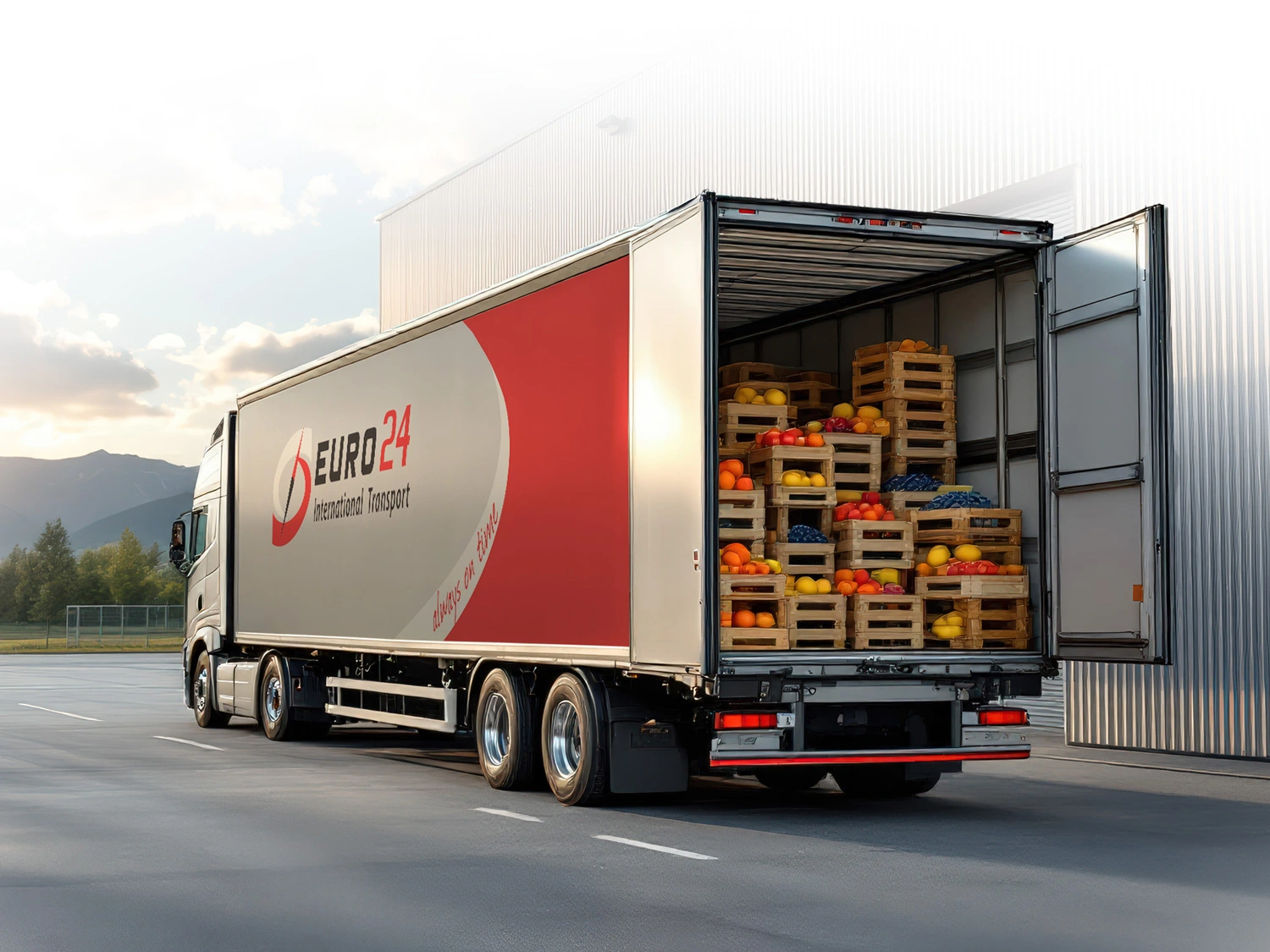
In business practice, road freight is not merely the transport of goods from point A to point B. It is a tool for managing a company’s operational continuity. Properly planned road transport can secure a production slot, minimize the risk of downtime, and maintain delivery flow in models that require a high level of synchronization. For this reason, its effectiveness does not depend solely on the rate per kilometer, but on the ability to combine transport capacity availability, transparent communication, and continuous monitoring of order execution. At Euro24, alongside the Freight Forwarding Department, the Control Tower plays a key role in this process, conducting ongoing transport monitoring 24 hours a day, 7 days a week, throughout the entire year. Continuous status control of orders, rapid response to unexpected events on the route, and constant communication with carriers and clients allow us to maintain a high level of operational predictability and minimize the risk of disruptions in the supply chain.
Transport Monitoring
Transport monitoring at Euro24 is an advanced logistics service that ensures full control over the execution of international shipments. Thanks to a dedicated Control Tower department available 24 hours a day, 7 days a week, clients receive up to date information about the status of their cargo at every stage of transport. The service includes verification of transport documentation, monitoring of vehicle locations, and immediate response in the event of unforeseen situations such as breakdowns or delays.

Air freight
Air freight is a form of cargo transport carried out using dedicated cargo aircraft or cargo space in passenger aircraft (so called belly cargo). It is primarily used in situations where delivery time, production continuity, sales seasonality, or high unit value of the cargo are critical. In practice, this means reducing lead time from weeks to a few days and, on intercontinental routes, even to 24 to 72 hours from dispatch to arrival at the destination airport. Operationally, air freight is not limited to the flight itself. It is a multimodal process in which air transport constitutes the central stage of the supply chain. The cargo is collected from the shipper by road transport (pre carriage), then delivered to the airport cargo terminal, where it undergoes security procedures, consolidation, and in the case of international shipments, export customs clearance. After arrival, import clearance is carried out, and the final leg (on carriage) is also most often handled by road, typically in a door to door model. Air freight is widely used in sectors with high operational dynamics, such as automotive, electronics, pharmaceuticals, the aviation industry, and fashion. It is particularly important in JIT models, for deliveries of components critical to production, goods with short life cycles, or the execution of urgent project orders. It is worth noting that the cost of air transport is usually calculated based on the actual weight or the so called volumetric weight (chargeable weight), which means that packaging parameters (length, width, height) directly influence the final rate.
Air transport at Euro24 is primarily carried out where delivery time is critical for maintaining the continuity of production processes or executing high value projects. In 2025, we completed nearly 200 air operations, and the total weight of handled cargo reached 118 tons. The heaviest single shipment transported by air weighed 14 tons, demonstrating that air freight handles not only small shipments but also large and demanding logistics projects. Euro24’s air operations in 2025 covered 24 countries across 5 continents in Europe, Asia, North America, South America, and Africa. In total, we served 13 loading countries (exports) and 19 unloading countries (imports). The most frequent destinations included Japan, China, the United States, South Korea, and India, some of the most important global production and technology hubs.
We deliver wherever you need!
We deliver cargo to almost every corner of the world while maintaining European standards of quality, safety, and process transparency. Regardless of the transport destination, you can rely on structured communication, regulatory compliance, and operational precision at every stage of execution.

The nature of the completed transports clearly shows why companies choose air freight despite its higher costs. The client structure is dominated by industries with high operational dynamics: automotive, high tech and industrial electronics, the aviation and precision industries, the production of electronic components, as well as industrial automation and robotics. In these sectors, delivery speed, transit time predictability, and transport security often have greater value than the transport cost itself. From a risk management perspective, air freight offers a high level of transit time predictability, but it requires precise slot coordination, consideration of cargo terminal cut off times, and continuous monitoring of cargo space availability, particularly during peak seasons. It is a more cost demanding solution than sea or rail transport, but in situations critical to business continuity it often proves to be the most rational choice not as the cheapest option, but as the most efficient from the perspective of the total cost of supply chain disruption.
Sea freight
Sea freight is a key segment of global supply chains, based on the transportation of goods by container ships between seaports around the world. It forms the foundation of intercontinental trade and is the primary solution for large volumes, bulk cargo, and products with lower time sensitivity. On a global scale, maritime transport accounts for the vast majority of trade between continents, making it the most scalable and cost efficient mode of transport over long distances. According to UNCTAD data, around 80% of global merchandise trade by volume is carried by sea. [1] A similar scale of importance can also be observed in Europe, where Eurostat statistics indicate that more than 75% of imports and nearly 74% of exports of the European Union by mass are transported by sea, confirming the crucial role of ports and shipping in the functioning of the European economy and international trade. [2] The operational standard consists of maritime containers, most commonly 20’ and 40’, including 40’ HC (High Cube). Depending on the client’s needs, shipments can be carried out in the FCL (Full Container Load) model, where the entire container is dedicated to a single shipper, or LCL (Less than Container Load), where container space is shared with other cargo. For goods requiring special conditions, refrigerated containers (reefer), open top, flat rack, or tank containers for liquid cargo are used. Sea freight is the most economical form of transport per unit of cargo on intercontinental routes; however, its cost efficiency is associated with longer transit times and a greater number of operational stages. In addition to the sea voyage itself, it is necessary to consider road or rail transport to the port of loading (pre carriage), port operations, export customs clearance, the sailing time, import procedures at the destination port, and further transport to the consignee’s warehouse (on carriage). Each of these stages requires precise documentary coordination, including the management of the Bill of Lading, Incoterms, and carrier schedules.
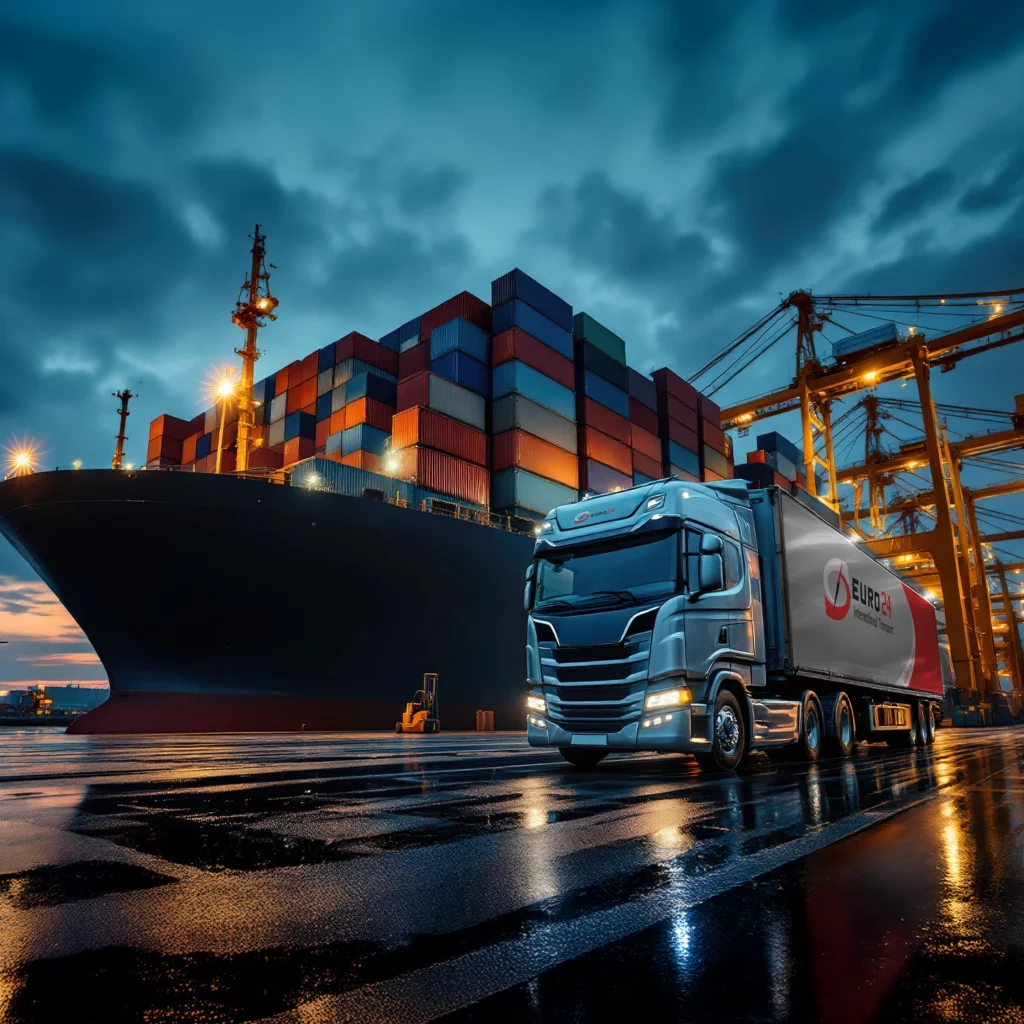
An important element of planning in sea freight involves sailing schedules, terminal cut off times, and potential port congestion. A longer lead time requires appropriate demand forecasting and synchronization with production or sales plans. At the same time, when safety stock is properly managed, sea freight can significantly optimize the total delivery cost in models based on large volumes and regular cargo flows. However, geopolitical disruptions have a direct impact on maritime logistics. According to UNCTAD, in 2025 the volume of transport passing through the Suez Canal remained approximately 70% lower than in 2023, forcing many global shipping routes to be adjusted. Transport bottlenecks also play a crucial role in global maritime logistics. For example, about 11% of global trade and nearly one third of global oil transport passes through the Strait of Hormuz. [1] For this reason, the security situation in the Middle East region is closely monitored by international organizations and the shipping industry. In a statement by the International Maritime Organization, it was emphasized that tensions in the Strait of Hormuz region increase risks for merchant vessels and their crews, and flag states and operators are required to update security plans and implement additional protective measures for vessels transiting this strategic transport route. [3] The geopolitical situation in the Middle East in 2026 has further increased uncertainty in global shipping. Tensions and security threats in the region are causing the rerouting of ocean services and the extension of transport routes. In practice, this means longer transit times, increased demand for transport capacity, and growing pressure on the schedules of global supply chains. [4] Environmental transformation is one of the most significant challenges facing modern maritime transport. Greenhouse gas emissions from the shipping sector increased by approximately 5% in 2024, accelerating efforts toward fleet decarbonization and the development of alternative fuels. At the same time, the energy transition is only gaining momentum. Currently, around 8% of the global fleet has the capability to use alternative fuels, which illustrates the scale of investment required to achieve long term climate targets. [1] At the same time, regulatory pressure regarding other environmental aspects of shipping is increasing. The IMO is working on a plan to completely eliminate plastic pollution from ships by 2030, including strengthening regulations on onboard waste management and limiting the release of microplastics into the marine environment. This demonstrates that the transformation of the shipping sector concerns not only CO₂ emissions but also the broader protection of marine ecosystems. [3]
Rail freight
Rail freight is a form of cargo transport carried out by freight trains between intermodal terminals and represents an important element of modern supply chains in a multimodal model. Cargo is most often transported in maritime containers (20’, 40’, 40’ HC), swap bodies, or trailers adapted for rail transport within intermodal systems.
This solution is primarily used for larger, recurring volumes and long term contracts, where cost stability and schedule predictability are of key importance. Unlike road transport, which offers high operational flexibility, rail freight requires precise planning of terminal slots, infrastructure availability, and transshipment coordination. In return, it provides greater efficiency for heavy cargo masses and lower emissions per ton kilometer. In Europe, rail transport currently accounts for approximately 18% of freight transport within inland transport, confirming its important role in handling long distance logistics flows. However, EU transport strategies assume a further increase in the importance of rail, with member states aiming to reach approximately a 30% share of rail transport in inland freight by 2030 in order to support transport decarbonization and reduce the burden on road infrastructure. [5] A particularly important role for rail can be observed in routes between Europe and Asia, where it serves as an alternative to sea and air transport. Compared with sea freight, it offers shorter transit times, while compared with air freight it provides a significantly lower unit cost. For this reason, it is often described as an “intermediate” solution, combining a rational delivery time with transport budget optimization. It is frequently used for transporting electronics, industrial components, consumer goods, or semi finished products that require stable but not express delivery flows. From an operational perspective, rail freight is based on connection schedules, route capacity, and the efficiency of transshipment terminals. Key aspects include locomotive availability, interoperability of railway systems between countries, and potential delays resulting from border inspections. At the same time, rail offers clear advantages in environmental efficiency and transport scale. According to analyses by the European Union Agency for Railways, rail transport can generate up to nine times lower CO₂ emissions per ton kilometer than road transport. [6] Industry analyses also indicate that the potential of rail is significantly greater, with member states aiming to increase the share of rail in inland freight transport by 2030 in order to support the development of more sustainable and efficient supply chains. [5] Properly planned rail transport therefore not only supports the creation of more sustainable and predictable supply chains, but also increases logistics efficiency for large volumes and regular cargo flows.
In practice, rail freight is not merely an alternative to other modes of transport but a conscious strategic choice. It requires planning and operational synchronization, but in return it offers cost stability, high transport capacity, and a favorable environmental balance, factors that increasingly influence logistics decisions of companies operating on an international scale.
Freight comparison:
| Parameter | Sea freight | Rail freight | Road freight | Air freight |
|---|---|---|---|---|
| Transit time | Very long | Long | Short | Very short |
| Cost (relative) | Low | Low / Medium | Medium / High | High |
| CO2 emissions | Low | Low | High | Very high |
What is not visible in the tables? Operational nuances.
Choosing the mode of transport is one thing. The second, often underestimated layer of a logistics decision consists of operational parameters that can change both the cost and the actual delivery time. Cut off, free time, volumetric weight, or rail schedules are not technical details; they are elements that directly affect the budget, the risk of delays, and the stability of the supply chain.

Cut off and time pressure:
Cut off is the final deadline for accepting cargo or documentation for a given stage of transport, at a seaport, rail terminal, or airport cargo warehouse. After this deadline, the cargo will not be loaded onto the scheduled vessel, train, or aircraft. In practice, cut off does not only mean the physical delivery time of the cargo. It also includes the closure of documentation, customs declaration, confirmation of VGM (Verified Gross Mass) in sea transport, or submission of the air waybill in air transport. A delay in any of these elements is enough to move the shipment to the next sailing, departure, or rotation. Time pressure in logistics often results from underestimating these deadlines. If production finishes at the last moment and transport is planned without an operational buffer, the risk of delay increases exponentially. In JIT models, missing a single cut off may mean not only a delayed delivery but also a real production stoppage on the consignee’s side.
Free time and port costs:
Free time is the period during which a container may remain at the port terminal (after import) or outside it (after pickup) without incurring additional charges. After this period expires, demurrage (container storage at the terminal) and detention (holding the container outside the terminal) charges apply. In theory, free time provides operational flexibility. In practice, however, in the case of delayed customs clearance, port congestion, or limited availability of road transport, this buffer can disappear very quickly. This is particularly important in intercontinental imports. A low sea freight rate may be offset by unexpected port charges if the pickup process is not precisely synchronized with inland transport and customs clearance. Planning the container pickup should therefore be part of a cost strategy rather than a reactive action.


Chargeable weight:
In air transport, the price does not depend solely on the actual weight of the cargo. The key factor is the so called chargeable weight, which is the higher of two values: the gross weight or the volumetric weight. Volumetric weight is calculated based on the shipment dimensions according to a specific conversion factor (most commonly 1 m³ = 167 kg). This means that light but bulky cargo may cost as much as if it weighed significantly more. For this reason, packaging height, stackability, or pallet dimension optimization have a direct impact on the rate. From the perspective of transport budget planning, it is essential that cargo parameters are known and confirmed before pricing. Differences of just a few centimeters in height can change the calculation of the entire shipment. In air freight, the precision of technical data is not a formality but an element of cost control.
Rail schedules:
Rail freight operates on fixed connection schedules between terminals. Unlike road transport, which can be arranged relatively quickly, rail requires reserving space in a specific train rotation. This means that flexibility is lower, but predictability (with well planned volumes) is higher. Problems arise when the cargo does not reach the terminal on time or when documentation is not completed before the scheduled departure. In such cases, the shift means waiting for the next available connection. On Europe Asia routes, rail schedules represent a compromise between time and cost. However, their efficiency depends on the synchronization of the first and last mile. Even the best planned rail transit will not compensate for delays at the stage of delivery to the terminal.


Last mile:
The last mile is the final stage of delivery, from the terminal, port, or airport to the consignee’s warehouse. In practice, this is often where the greatest operational challenges occur: unloading time restrictions, lack of warehouse slots, urban regulations, or the need to use a vehicle with specific parameters. Although it usually represents a smaller percentage of the total transport cost, its operational importance is critical. A delay in the last mile can disrupt even a very precisely planned intercontinental transport. For this reason, effective logistics management does not end with choosing the mode of transport. It covers the entire chain, from the first cut off to the final unloading. Only by considering these elements together is it possible to realistically control cost, time, and risk within the supply chain.
Typical mistakes when choosing a type of freight
In theory, transport looks simple: goods leave point A and arrive at point B. In practice, most problems do not result from the mode of transport itself, but from small inaccuracies that initially seem insignificant. One missing piece of information in the documents, one incorrectly stated dimension, or an underestimated transshipment time can trigger a domino effect. Most often, these are not spectacular mistakes. They are rather small operational missteps that in logistics quickly turn into real costs.
Road freight: underestimating time and operational variability
Road transport is the most flexible, but for that reason it is often treated as “obvious”. Many companies assume that if road transport on a given route usually takes a certain amount of time, it will always look exactly the same. In practice, the road environment is far more dynamic. The most common mistake is underestimating transport time when planning production or unloading. A longer border inspection, congestion on a main route, or the lack of an available slot at the consignee’s warehouse is enough for the ETA to shift by several hours, and sometimes by a full day or more. In a production model based on just in time deliveries, such a difference may require reorganizing a production shift or may even cause a line stoppage. In practice, road freight offers a high level of flexibility, but it requires a realistic approach to transport time and an appropriate operational buffer.
Air freight: imprecise weight and dimension data
In air transport, data accuracy is crucial. Unlike road transport, where small differences in cargo dimensions usually do not significantly affect the transport itself, in air freight every centimeter matters. The most common issue is the difference between actual weight and volumetric weight. Airlines use a volumetric conversion factor, which means that a large but lightweight shipment may be charged as if it were significantly heavier. If the data provided during the quotation stage is imprecise, the transport cost may change once the cargo is accepted at the cargo warehouse. Another frequent mistake is failing to align the schedule with cut off times. In air transport, missing the cut off usually means that the cargo will not depart on the planned flight and must wait for the next one. Depending on the route, this may delay delivery by several or even dozens of hours. When air freight is used to rescue production or handle an urgent delivery, such a difference can completely change the logic of the operation.
Sea freight: a small error, major consequences
Sea transport is the most sensitive to documentation errors. In many cases, it is the documentation that determines whether a container will smoothly pass through the port and customs clearance. One of the most common problems is inconsistency between transport documents, the commercial invoice, and the packing list. This may involve differences in the product name, HS code, number of units, or weight. In practice, the consequence often looks similar: the container arrives at the port of discharge but cannot be cleared. Each additional day of storage generates demurrage charges, and the container remains blocked at the terminal. It happens that due to a missing reference number or a small inconsistency in the documentation, a container remains at the port for several days. The cost of such a delay can quickly exceed the savings resulting from an attractive freight rate.
Rail freight: lack of a contingency plan when the schedule changes
Rail transport on intercontinental routes is stable but less flexible than road transport. Trains operate according to fixed schedules, and changing the transport plan during transit is much more difficult. The most common mistake is treating rail transit time as guaranteed. In reality, rail transport consists of several stages: delivery to the terminal, transshipment, transit through multiple countries, and changes in track gauge at certain borders. If any of these stages is delayed, the schedule of the entire transport may shift. For this reason, when using rail transport it is particularly important to plan deliveries with an appropriate time margin. Companies using rail for the first time often also fail to consider the operational time required at intermodal terminals. The train journey itself may take two weeks, but the entire logistics operation also includes road transport on both the first and the last mile.
Everything starts with input data
Regardless of the type of transport, most problems begin in the same place, with the input data. An inaccurate weight, incomplete documentation, or an overly optimistic schedule can turn a well planned transport into a series of unnecessary complications. Therefore, in practice, the most important part of freight planning is not only choosing the mode of transport, but also the precise preparation of data and a realistic approach to the logistics process.
| Mistake | Practical consequence | How to avoid it |
|---|---|---|
| Inaccurate cargo weight and dimension data | Change in transport price, the need to reorganize the loading, or lack of space on the aircraft or in the container | Provide exact dimensions, gross weight, and information about stackability |
| Missing the cut off in air or sea transport | The cargo does not make the planned sailing or flight and must wait for the next one | Plan delivery to the terminal with a time buffer |
| Inconsistent data in transport documents | Delay in customs clearance or cargo being held | Check the consistency of the commercial invoice, packing list, and transport documents |
| Underestimating road transport time | Delayed unloading, changes to warehouse slots, or the need to reorganize production | Include a time buffer and consider transport seasonality |
| Failure to account for port costs and additional charges | The final transport cost is higher than expected | Analyze the total transport cost, not only the freight rate |
The freight rate is only one part of the transport cost. Delivery time, the risk of delays, operational charges, and the impact of transport on production and inventory levels are equally important. Often, transport that initially appears cheaper turns out to be more expensive across the entire supply chain.
3 questions worth asking before choosing a freight option:
A comparison table shows the differences between transport modes, but in practice the decision rarely comes down only to time or price. In logistics, it is more important to match the transport mode to the realities of your company, the way production is planned, inventory levels, and risk tolerance. Before deciding whether road, sea, rail, or air transport will be the better option, it is worth answering three simple questions.

What is more important: time, cost, or predictability?
Each mode of transport optimizes a different element. Air transport minimizes delivery time but is the most expensive. Sea transport allows costs to be significantly reduced for large volumes but requires longer planning. Rail often represents a compromise between time and price, while road transport offers the greatest operational flexibility. Therefore, the first question should concern priorities. Is the shortest possible delivery time the most important in your case? Or rather a stable transport cost? Or perhaps predictability and the ability to react to changes are the key factors? In many companies, the answer to this question results from the nature of the product. Production components or spare parts often require fast delivery. Goods with large volumes and stable demand are better transported using solutions that optimize cost.

What level of risk are you able to accept?
Every transport involves a certain level of operational risk. In sea transport, the risk mainly relates to longer delivery times and possible delays at ports. In rail transport, synchronization between terminals and train schedules is crucial. Road transport is the most flexible, but it still depends on traffic conditions, road situations, or driver availability. Therefore, it is worth asking whether your company can accept small shifts in delivery time. If production operates with minimal inventory, even a delay of several hours may be significant. However, if you plan shipments well in advance, a slower mode of transport may be more cost effective. In practice, many companies apply a mixed approach, the base volume is shipped using more economical transport, while faster solutions are used for urgent situations.
In practice, logistics is rarely an “either–or” choice. Increasingly, companies combine different modes of transport to better match logistics with their operational needs. This approach is called multimodal or intermodal transport and allows the advantages of several freight types to be combined within a single supply chain. The simplest example is intercontinental transport. Cargo may arrive by container at a European port, then be transported by rail to an intermodal terminal, and complete the final leg of the journey by truck. This makes it possible to use the economies of scale of sea transport, the stability of rail, and the flexibility of road transport. Similar solutions are also used when it is necessary to balance cost and delivery time. Part of the volume may be transported by sea or rail, while a small portion (for example urgent components) is delivered by air. In this way, companies keep costs under control while securing production continuity. Multimodal transport also increases supply chain resilience. If one element of the transport encounters delays, other parts of the system can absorb part of the load. Instead of a single rigid solution, a more flexible logistics model is created. In many industries, this approach is becoming the standard. Logistics is no longer simply the choice of a single transport mode, but the deliberate design of the entire delivery process.

What happens if the plan changes?
Logistics does not always proceed exactly according to schedule. A change in the production plan, a shift in the delivery date, or a sudden increase in orders may require a quick response. Therefore, the third question concerns flexibility. Does your transport model allow you to change the plan during execution? If necessary, can you accelerate delivery or change the mode of transport? In road transport such changes are relatively easy to implement. In sea or rail transport, planning is more long term, which makes reacting to changes more difficult. For this reason, many companies design their logistics in a way that allows them to use different modes of transport depending on the situation.

In logistics, there is no single best type of freight. Each solution has its strengths and limitations, which is why it is crucial to match the transport mode to the company’s real needs. In practice, the best transport model depends on several factors: inventory levels, the transport budget, risk tolerance, and operational flexibility. Companies that can consciously manage these elements build more stable and predictable supply chains. For this reason, choosing a freight option should not be based solely on price. It is far more important to understand how transport affects the entire logistics process, from production planning to product availability at the customer’s location.
The golden rule of logistics is simple: The cheapest transport is the one that is well planned.
That is precisely why at Euro24 we approach transport in a comprehensive way. As a logistics operator, we combine different modes of transport and select solutions depending on the characteristics of the cargo, the market, and the client’s operational requirements. We provide comprehensive service and solutions tailored to specific business needs, because in practice the most important aspect of logistics is finding the best solution in a given context.