Blog
Modern logistics in industrial automation and its role in maintaining process continuity
The industrial automation sector places unique demands on logistics departments. On one hand, there’s growing pressure to reduce costs and boost efficiency; on the other, maintaining on-time deliveries and responding to rapid market shifts is more challenging than ever. Traditional supply chain management methods often fall short in the face of global disruptions, component shortages, or demand fluctuations. That’s why a transport company capable of meeting the specific needs of this sector is worth its weight in gold.
The pandemic has already shown that companies need to gain better visibility and flexibility within their supply chains, and during the crisis, many organizations were desperately searching for transport solutions that would provide shipment monitoring and more effective planning despite staff shortages. At the same time, logistics professionals in industrial automation factories, often working in reduced teams, have limited decision-making power when selecting suppliers, while the responsibility for timely production supply and avoiding downtime rests entirely on them. So how can these challenges be met? The solution lies in a digital supply chain based on system integration, process automation, and the use of emerging technologies such as IoT and artificial intelligence. An important element of any such model is also collaboration with a trusted transport partner, who will ensure safe and timely deliveries.1
Digital supply chain and system integration
One of the foundations of logistics transformation is the digital supply chain, meaning full digitalization and integration of all stages, from procurement, through warehousing and transport, to delivery to the customer. In practice, this means connecting previously scattered systems (ERP, WMS, TMS, etc.) into a single data exchange platform, so that information flows smoothly in real time between planning, production, purchasing, and logistics departments. In the traditional model, each of these sections often operates with its own spreadsheets and reports, which leads to information silos, resulting in data that is outdated, inconsistent, or incomplete. For this reason, planning is often ineffective, costs increase, and deliveries are delayed. There is a lack of a «binding mechanism» across all areas, which results in process fragmentation and makes coordination more difficult. Digital integration means modern platforms that can link demand forecasts, production schedules, warehouse stock, and transport plans in one system, providing everyone with a current “big picture.”2 To fully leverage the advantages of digital integration and ensure supply chain continuity, constant supervision of every transport is essential. Euro24 Control Tower monitors the status of all orders, from departure to delivery to the customer. Transport Monitoring becomes a key element that connects processes into one cohesive oversight system, eliminating downtime and raising the level of logistics services.
TRANSPORT MONITORING
Euro24 provides round-the-clock monitoring of order execution through the Control Tower system, which tracks transport status 24/7, immediately reports any irregularities, and enables proactive management of emergency situations. Thanks to this, logistics professionals can sleep peacefully, knowing that every stage of delivery is under constant control.

System integration is the key to full control and predictability in industrial automation logistics. When all departments, from purchasing, through warehousing, to transport, operate based on a single, up-to-date data source, delays caused by outdated information are eliminated (e.g. production doesn’t come to a halt due to overlooked delivery delays). This digital model guarantees transparency: managers can track the status of every shipment in real time, and all participants in the chain, from raw material suppliers to end recipients, have access to the same, current «map» of flows. Implementing the Warehouse 4.0 concept, a fully digitized warehouse, further enhances the supply chain with detailed data on stock levels and demand forecasts, which significantly reduces the risk of downtime and enables smoother production planning.2 When every hour of delay can mean a production line standstill, reliable road transport solutions, precisely planned and executed internationally, become essential. Euro24 supports these processes using advanced systems like HOGS, which automate cost calculations and optimize routes in real time, ensuring maximum efficiency and on-time delivery.
HOGS
HOGS is an advanced TMS module implemented by Euro24, designed for the full automation of transport planning and cost calculation. Unlike traditional systems, HOGS analyzes in a fraction of a second factors such as route, road conditions, seasonality, fuel prices, and the availability of loads and vehicles to optimally select the route with minimal distance and operational costs.

It’s worth noting that the digital supply chain is not only software but also a new philosophy of work, based on real-time data, automated decision-making, and collaboration between all partners. For example, digital data-sharing platforms with suppliers and carriers are becoming increasingly popular, enabling automatic exchange of information (e.g. via API or EDI) about order status, shipments, estimated times of arrival (ETA), etc. Such integration with external partners further increases predictability, as if a component supplier is delayed, the system can immediately alert production planners and logistics specialists, who can adjust the schedule in advance. Digital platforms therefore enable quick responses to deviations from the plan, minimizing production downtime. Full digitalization also provides a wealth of historical data that can be analyzed for insights. Industrial companies collecting data from their supply chain (from weather data affecting transport to supplier performance) can build predictive models and «what if» scenarios, significantly improving the decision-making process.2
Digital ecosystems and data exchange standards in industry are also gaining importance. Initiatives within the framework of Industry 4.0 aim to ensure that machines, warehouses, suppliers, and carriers communicate in a standardized way. This makes the integration of additional links (e.g. adding a new carrier to the company’s system) faster and easier, reducing the entry barrier for new, innovative services in the supply chain. The ultimate goal is clear: end-to-end visibility, meaning insight from the raw material at the supplier all the way to the product delivery to the customer, all within a unified digital environment. This approach transforms supply chain management into supply chain optimization, resources are used more efficiently, and bottlenecks are quickly identified and eliminated.2 For this reason, Euro24 combines its in-house 24/7 Monitoring Department with a dedicated fleet, ensuring customers in the industrial automation sector full transparency, flexibility, and continuity of deliveries even under the most demanding conditions.
Automation of logistics processes – robotics and AI in the warehouse
Autonomous mobile robots (AMRs) transporting loads in an industrial warehouse. Faced with labor shortages and increasing operational complexity, companies are boldly investing in logistics process automation. Autonomous warehouse robots can navigate the warehouse floor on their own, delivering goods exactly where they’re needed and right on time. The most advanced AMRs, equipped with sensors and artificial intelligence, can avoid collisions, recognize their surroundings (e.g. people, forklifts), and dynamically optimize their routes on the fly.3
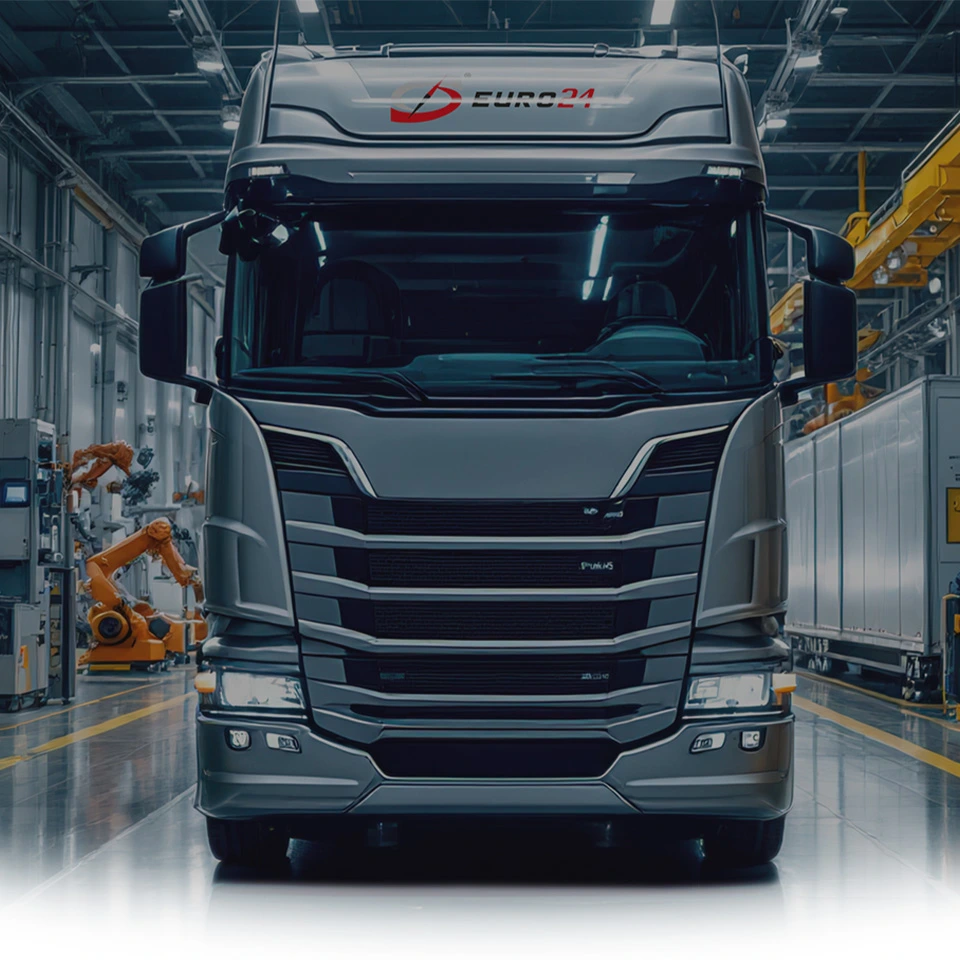
Physical automation in warehouses and distribution centers has become a dominant trend, especially in sectors like industrial automation, where maintaining continuity in component supply is critical. Traditional warehouses relied on human labor and, at best, stationary systems (such as conveyors or overhead cranes). Today, within the Warehouse 4.0 concept, we increasingly encounter smart devices: automated guided vehicles (AGVs) and autonomous mobile robots (AMRs) transporting pallets between zones, order-picking robots, automated racks, and self-driving carts. These solutions significantly speed up warehouse operations, eliminating delays and errors caused by human factors. What’s crucial for the automation sector, where inventory ranges from tiny components to heavy machinery, is that modern automation systems are flexible. While older warehouse automation was rigidly designed for specific processes, today’s robots can be reprogrammed or taught new tasks. According to analyses, mobile robots (AMRs) allow for the creation of more flexible, decentralized storage and picking systems, in contrast to the old, centralized conveyor-based models.3
Automation in internal logistics also addresses the issue of labor shortages. In many countries, there is a lack of warehouse workers, and those available are often burdened with overtime. Robots and cobots (robots collaborating with humans) can take over the heaviest and most monotonous tasks such as load transport, goods stacking, or parcel packing. This allows human staff to be reassigned to higher-value tasks that require supervision or creativity (planning, quality control, process improvements). For the logistics department, this means relief and better utilization of limited human resources. Moreover, automation reduces the risk of errors and accidents, as a robot equipped with 3D cameras and lidar will not confuse drop-off locations. Statistics show that modern robotic systems significantly improve warehouse safety, reducing the number of incidents.3
Automation of logistics processes is not only about robots moving physical goods. Equally important is the automation of information and decision-making processes, where artificial intelligence (AI) and advanced data analytics play a crucial role. Transportation Management and Warehouse Management systems increasingly feature built-in AI modules that participate in operational decision-making. For example, AI can optimize order placement and inventory replenishment processes. If the stock level of a given component drops below a set threshold, the system automatically generates a purchase order, selects the optimal transport method, and schedules the delivery. This kind of automation ensures that production is not halted due to a lack of parts, while also preventing excessive inventory buildup. Another example is automatic planning of shipments and transport routes. Modern platforms can analyze available transport options (courier services, freight forwarding, own fleet) and, based on defined criteria (cost, time, reliability), choose the best option for each shipment. As a result, every parcel or pallet leaves the warehouse via the most cost-effective and efficient route, without the need for manual carrier selection. Moreover, algorithms can consolidate orders and plan delivery routes optimally in terms of time and cost, taking into account factors such as road traffic or time window restrictions at the customer’s location.4
AI also supports maintaining the highest quality and accuracy of logistics operations. In warehouse processes, we now see automated quality control systems, where cameras and sensors powered by algorithms can continuously verify the correctness of order picking or the condition of goods. Detecting an error (e.g. a wrong component packed into a set) triggers an automatic alert and correction before the shipment leaves the warehouse. This kind of automated “double-check” can raise shipment accuracy to nearly 100%, eliminating the costs of errors and complaints. Another area is predictive performance management, where AI analyzes process efficiency (e.g. order picking times, packing station workload) and can suggest changes in warehouse layout or work schedules to eliminate bottlenecks.4
Euro24 has been cooperating with companies from the industrial automation sector for years, which is why, as a logistics operator for this industry, it fully understands the specific challenges faced by their logistics departments. To fully unlock the potential of automating informational and decision-making processes, it is essential to have logistics support that offers equally advanced transport services.

Dedicated and express transport by Euro24
We synchronize transport with the rhythm of robots and the schedule of production lines, ensuring that shipments arrive at the warehouse exactly when they are needed. Our Euro24 Express Dedicated services guarantee priority loading, minimized unnecessary downtime, and precise delivery time windows.
Euro24 Contract Logistics
Thanks to a framework agreement, we provide consistent logistics support perfectly aligned with automated picking and kitting processes. Flexible contract terms allow for quick adjustments to volumes and schedules without the need for repeated negotiations.


Evening quotations
Production doesn’t stick to office hours, which is why we offer the option to order transport and receive full cost calculations after shift hours, including weekends and holidays. The Euro24 Evening Quotation service enables a swift response to urgent needs, eliminating delays in planning.
24/7 monitoring in the Control Tower system
Our Euro24 operations center works around the clock, tracking shipments and generating alerts in case of unexpected events. This enables immediate intervention, from vehicle replacement to route redirection, minimizing the risk of downtime and ensuring full transparency of the process.

When every hour of delay can mean a production line standstill, reliable road transport solutions, precisely planned and executed on an international scale, become critical. Automation of logistics processes brings multidimensional benefits: it reduces operational costs, shortens cycle times, improves safety and quality, and helps manage growing complexity (more SKUs, more frequent small-batch shipments, the need for rapid adjustments). For companies in the industrial automation sector, this is extremely important, as it allows them to maintain delivery predictability of components to their production lines, even as their operations scale or market conditions shift.
Internet of Things (IoT) and real-time data
Another pillar of modern logistics is the use of the Internet of Things (IoT), a network of interconnected devices and sensors that collect and transmit data. In logistics, IoT takes many forms, from sensors in vehicles and trucks, through smart pallets and containers equipped with GPS and environmental sensors, to wearable devices that support human work (scanners, trackers). IoT is precisely the kind of technology that provides real-time insight into the location and condition of goods, forming the basis for making accurate logistics decisions.5
IoT applications in logistics are extremely broad5

Real-time asset and shipment tracking: One of the primary applications of IoT involves GPS trackers and sensors mounted on vehicles, containers, or even individual shipments. This solution increases delivery predictability if a shipment gets stuck en route or is exposed to unfavorable conditions, we know immediately and can react (for example, by sending a replacement component via an alternative route before the delay impacts production).

Storage condition monitoring (cold chain): In the logistics of sensitive products (such as precision electronics that should not be exposed to extreme temperatures or humidity), IoT is increasingly used to monitor environmental conditions. Temperature, humidity, and shock sensors placed in packaging or containers can trigger alerts when conditions go outside the specified range. If a deviation occurs (for example, temperature rising above the norm), the system automatically sends a notification to operators and customers, enabling quick action. In case of detected issues, alerts from the RCM system allow for fast decision-making, such as switching the container to backup power, redirecting it to a closer port, or preparing an emergency replacement shipment.

Smart warehouses and inventory management: IoT in the warehouse appears through smart shelves equipped with weight sensors or cameras that continuously monitor stock levels at a given location. When the number of components on a shelf drops below a threshold, the system can automatically register this in the WMS and generate a replenishment order from the central warehouse or trigger a purchase order. These sensor-equipped warehouses reduce the need for manual inspections and inventories, stock levels are always up to date, and the risk of unexpected part shortages decreases. The previously mentioned mobile robots are also part of the IoT ecosystem as they communicate with the system and transmit data about their location and tasks in progress. Combined with a digital twin of the warehouse, this provides a complete real-time view of operations. For the logistics department, this means fewer surprises as a sudden spike in part picking by production is immediately detected and the system will most likely automatically take care of replenishing missing components.

Route optimization and fleet management: IoT provides real-time data on vehicle location, traffic intensity, road conditions, and even driver behavior. This enables fleet management systems to dynamically optimize routes, avoid traffic jams, consolidate shipments from different customers into a single run, or redirect drivers to priority tasks. Moreover, monitoring driving parameters such as acceleration, braking, and working hours supports both safety and efficiency by detecting driver fatigue or uneconomical driving and sending corrective recommendations. For automation companies that often rely on just-in-time deliveries, this kind of route optimization can be critical, allowing for more accurate delivery time predictions to production sites and enabling fast alternatives if needed. For example, if one vehicle breaks down, the nearest available truck can take over the load.
At Euro24 we support clients from this sector on a daily basis which is why we fully understand how crucial tailor-made logistics truly is based on precision, dedicated transport solutions, and digital supply chain management. The Just-in-Time transport service synchronizes component deliveries with the production line cycle allowing goods to arrive at the warehouse exactly when they are needed. Flexible schedules and priority handling ensure that buffer stocks are kept to a minimum and the risk of costly downtime is reduced to a minimum.
JUST IN TIME
Just-in-time transport at Euro24 means precisely synchronized deliveries of components and parts, executed within strictly defined unloading windows to minimize buffer stock and avoid production line downtime. Support from the 24/7 Control Tower, a dynamic fleet ready to depart immediately, and flexible emergency procedures ensure supply continuity even under the most demanding production schedules.


The integration of IoT with logistics turns logistics software into a strategic company asset, offering an entirely new level of control over the supply chain. This trend is so strong that a massive increase in IoT investment for transport and logistics is projected. According to analyses, the IoT logistics market is expected to reach 114.7 billion USD by 2032, with an average annual growth rate of 11.2%. This means that companies that adopt sensors and IoT analytics early will gain a significant competitive advantage. In industrial automation logistics, IoT can be especially valuable as it helps meet stringent quality and timing requirements such as delivering precision components directly to the production line within a specific time window. It also allows for quick responses to unexpected events, such as machine breakdowns or delayed flights carrying essential shipments.5
Efficiency and predictability through smart logistics
The trends described above such as digital integration automation of processes and IoT with analytics are not distant futurism but are already transforming the daily reality of logistics departments. Moreover the pace of these changes is likely to accelerate in the coming years. Artificial intelligence is constantly learning and improving in planning tasks robots are becoming cheaper and more accessible even to mid-sized companies and sensor networks are expanding across more facilities and vehicles. Many research centers and industry leaders are investing in logistics innovations. For example the renowned MIT has recently established a dedicated Laboratory for Intelligent Logistics Systems focused on using AI and machine learning to solve the most complex logistics challenges. This clearly shows that predictability and speed are becoming the new battleground of technological competition and those who can better forecast demand and plan their supply chains will gain the upper hand.6
For logistics professionals in industrial automation all these changes mean one thing the tools that can significantly simplify work and improve performance are already within reach. Implementing a digital supply chain and modern technologies may sound like a large-scale project but it starts with smaller steps such as integrating existing systems automating a single process or launching a pilot with a few IoT sensors on key routes. Each of these steps brings tangible improvements and over time they add up to a significant leap in the overall efficiency of the department.
The digital transformation of logistics brings logistics teams in industrial automation a range of benefits such as:2
- Higher operational efficiency automation and AI eliminate bottlenecks speeding up task execution and reducing costs. For example AI can optimize the route of each shipment to ensure it takes the fastest and most cost-effective path while robots work continuously without breaks increasing warehouse throughput.
- Better delivery punctuality with real-time tracking and algorithms that predict potential delays it becomes easier to meet agreed deadlines. If a delay occurs with one supplier the integrated system will more quickly activate a contingency plan to keep production running. As a result the key indicator OTP (on-time delivery) improves.
- Greater predictability and control with connected data from all supply chain links logistics teams can spot trends earlier such as increasing demand for a specific component and proactively manage the supply chain. Seamless integration of autonomous technologies and IT systems enables the achievement of operational excellence where processes run like clockwork.
- Team relief and better use of talent routine and repetitive tasks are taken over by systems and machines allowing employees to focus on strategic tasks and problem solving. Less firefighting and more development work increases job satisfaction and makes better use of the expertise of experienced logistics professionals.
- Increased flexibility and supply chain resilience the digital model allows for faster adaptation to change. When demand suddenly shifts or a disruption occurs such as a breakdown lockdown or transport delay agile and digitized logistics can quickly reschedule deliveries find alternative sources of supply or reroute shipments. This helps the company avoid costly downtime and maintain operational continuity even in challenging conditions.
In international transport where changing road conditions weather or border situations can have a real impact on delivery times such solutions make it possible to act in advance and minimize risk. That is why choosing a carrier like Euro24 which combines technology with operational experience is crucial today for the stability of the entire supply chain.
Logistics without delays
Transport in the industrial automation sector allows no compromises. Precision is essential, from on-time delivery of components and equipment to full compliance with quality requirements and system continuity. A logistics partner who understands the specifics of production and the pressure of maintaining an uninterrupted cycle ensures smooth processes and minimizes the risk of costly downtime.
Discover how we can support your business.
Logistics 4.0 in industrial automation is no longer just an advantage but increasingly a necessity to meet the growing demands of the market. Those who invest early in a digital supply chain system integration and automation will gain a competitive edge and peace of mind knowing their supply chain is efficient transparent and resilient to future challenges. This transformation supports not only better business results but also builds customer trust through on-time deliveries and high-quality service and boosts the motivation of logistics teams by providing them with modern tools that make their work easier. In the world of industrial automation where precision reliability and innovation are everyday standards logistics can no longer remain analog. The digital evolution of logistics is a natural step forward opening the way to further development of the entire automation business. With the right technological and partnership support logistics departments can become a true engine of innovation and efficiency delivering measurable advantages on the market. Cooperation with trusted transport partners such as Euro24 is equally important because it is precisely through such partnerships that 4.0 solutions become reality providing safe flexible and on-time deliveries.
Sources:
- Mark Brant, Next-gen Warehouse Operations Start with Next-gen Wireless, January 2023, [accessed 2025-07-08], https://www.automation.com/en-us/articles/january-2023/next-gen-warehouse-operations-next-gen-wireless. ↩︎
- Yuji Izawa, Supply Chain Management with Digital Transformation, January 2023, [accessed 2025-07-08], https://www.automation.com/en-us/articles/january-2021/supply-chain-management-digital-transformation. ↩︎
- Mobile Industrial Robots, Automated Warehouse Robots – Discover the Efficiency of AMRs, [accessed 2025-07-08], https://mobile-industrial-robots.com/blog/warehouse-robots. ↩︎
- Alan Silberstein, The AI-Driven Transformation of Supply Chains: Trends, Benefits and Future Outlook, November 2024, [accessed 2025-07-08], https://www.automation.com/en-us/articles/november-2024/ai-driven-transformation-supply-chains-trends. ↩︎
- Anna Iuchanka, IoT in Supply Chain Management: Uses and Examples, January 22, 2024, [accessed 2025-07-08], https://www.automation.com/en-us/articles/january-2024/iot-supply-chain-management. ↩︎
- Automation.com, MIT Center for Transportation & Logistics Launches Lab Supported by Mecalux to Research Potential of AI in Logistics, July 2024, [accessed 2025-07-08], https://www.automation.com/en-us/articles/july-2024/mit-center-transportation-logistics-lab-ai. ↩︎
Have you got questions?
Drop us a line. Together, we’ll identify solutions for your transport requirements.
Arrange a «virtual coffee» with our Sales Representative and find out how we can ensure the collaboration comfort you’re after. Eliminat the stress associated with transport. Our staff carefully identify your transport priorities to craft a bespoke offer.
Discover how we can bolster your business.
GET YOUR TRANSPORT QUOTE AS SOON AS POSSIBLE >>