Blog

Air Freight Organization. The Role of the Freight Forwarder, GSA, Handling Agent, and Customs Agent.
Published: October 1, 2026
Air freight organization is a process involving several parties responsible for different stages of transport. The freight forwarder coordinates the entire operation, the GSA represents the airline in cargo sales, the handling agent is responsible for the physical handling of the shipment at the airport, while the customs agent handles customs clearance formalities. Efficient information flow between all parties directly affects whether the cargo is prepared, cleared, and handed over for transport according to schedule.
The importance of this coordination increases as the market grows. According to IATA data, in June 2026, global air cargo demand, measured in CTK (Cargo Tonne-Kilometres), increased by 8.5% compared with June 2025, while international demand rose by 9.6%. Over the same period, capacity, measured in ACTK (Available Cargo Tonne-Kilometres), increased by 4.4% globally and by 4.9% for international operations. [1]
Behind these figures are specific operations carried out for every shipment: from analysing cargo parameters and booking space on an aircraft, through transport to the airport and handling, to customs formalities and final delivery to the consignee. Each of these stages requires proper preparation and close cooperation between several parties.
What does the air freight process look like?
The air freight process involves much more than the flight between two airports. It begins with an analysis of the shipment parameters, followed by selecting the appropriate connection, booking cargo space, transporting the cargo to the airport, terminal handling, completing the required customs formalities, air transport, and onward distribution after arrival.
The scale of global air traffic illustrates the complex environment in which transport operations are carried out. On July 23, 2026, Flightradar24 recorded a record 153,359 commercial flights in a single day, the highest number in the service’s history. When other categories, including private and military aviation, were included, the total number of flight operations tracked that day reached 287,364. These figures demonstrate the scale of air traffic within which cargo shipments are also handled every day, requiring coordination between carriers, airports, handling agents, and other participants in the logistics chain. [2]
The growing importance of air freight is also evident in the Polish market. According to data from the Polish Civil Aviation Authority (ULC), in 2025 Polish airports handled a total of more than 213.6 million kg of cargo on board in domestic and international traffic, representing a 7% increase compared with 2024.
The highest volume was recorded at Warsaw Chopin Airport, which handled more than 137 million kg, an increase of 17.1% compared with the previous year. Katowice-Pyrzowice Airport ranked second, handling more than 33.4 million kg, up 20%, while Rzeszów-Jasionka Airport handled nearly 20.8 million kg of cargo. [3] The ULC data therefore illustrates not only the scale of air freight operations in Poland, but also the important role of the country’s largest airports in cargo handling. Behind these figures are individual shipments, each of which requires careful planning.
Step by step:
The process begins by determining the weight, dimensions and type of cargo, the pick-up and delivery locations, the required delivery time, and any special requirements. It is also important to establish whether the cargo can be stacked, meaning whether other shipments can be safely placed on top of it. This affects how the available cargo space can be used, so any stacking restrictions should be identified at the transport planning stage. Based on the shipment parameters, the freight forwarder selects the appropriate transport solution and arranges the booking, i.e. reserves cargo space. The next step is to deliver the shipment to the airport before the specified cut-off, which is the deadline for accepting the cargo for a given operation. The cargo then undergoes handling and, where required by the nature of the shipment, the relevant customs procedures. Once all operational and formal requirements have been met, the shipment can be handed over for the planned transport. Each of these stages depends on the previous one, which is why air freight organization requires precise coordination of timing, operations, and documentation. This is where the freight forwarder plays a key role, coordinating the activities of the other parties involved in the process.
What does an air freight forwarder do and what are they responsible for?
An air freight forwarder acts as the central coordinator of the entire operation. Their role is not limited to finding a suitable flight, but involves bringing all stages of the transport process together into a single schedule. The process begins with analysing the shipment. The freight forwarder checks the cargo parameters, required delivery time, and available transport options. They then select the appropriate solution, arrange the booking, and coordinate the transport of the cargo to the airport. At subsequent stages, the freight forwarder remains in contact with the parties responsible for cargo space, handling, and customs formalities. Once the shipment arrives at the destination airport, they also arrange onward transport to the final destination if the shipment is being handled on a door-to-door basis. In practice, the freight forwarder must synchronise three interdependent areas: timing, operations, and documentation. A confirmed booking is not enough if the shipment does not reach the terminal before the required cut-off. Delivering the cargo on time will not be sufficient if missing documentation prevents the necessary formalities from being completed. Likewise, having all the required documents will not solve the problem if the shipment does not meet the requirements for acceptance for transport.

Paweł Twardokęs
Airfreight Director
pawel.twardokes@euro24.com
+48 721 250 558

Piotr Szala
Airfreight Development Leader
piotr.szala@euro24.com
+48 721 000 421

Anna Gralla
Airfreight Development Specialist
anna.gralla@euro24.com
+48 721 000 087

Maciej Buff
Airfreight Development Specialist
maciej.buff@euro24.com
+48 721 000 419
That is why at Euro24 we approach the organization of air freight as one interconnected process rather than a series of separate operations. At Euro24, this process is managed by a dedicated Air Freight team, which coordinates each stage of the shipment – from cargo pick-up and booking cargo space, through handling and customs formalities, to final delivery. This approach is particularly important for shipments requiring non-standard solutions or a short response time. Depending on the customer’s needs, we organize, among others, time-critical shipments, priority shipments, OBC (On Board Courier) services, air charters, dangerous goods transport, consolidation, and customs clearance, including fiscal clearance under procedure 33A. Regardless of the solution selected, the freight forwarder remains the central point of coordination, bringing together the activities of the carrier, GSA, handling agent, customs agent, and road transport providers into one seamless process from shipper to consignee.
What role does a GSA play in air freight?
A GSA (General Sales Agent) represents an airline within the scope of cargo sales entrusted to it and is one of the parties a freight forwarder may work with when organizing transport. There are several GSAs operating in Poland, each of which may represent multiple airlines. A GSA is primarily responsible for the commercial side of air freight, including cargo space availability, rates, and accepting bookings for connections operated by the airlines it represents. The freight forwarder provides the GSA with shipment details, including weight, dimensions, type of cargo, required timing, and destination. Based on this information, the feasibility of the shipment and the availability of space on a specific connection are verified. This is particularly important for shipments with non-standard dimensions, cargo requiring special transport conditions, or non-stackable cargo, as these parameters affect how the available cargo space can be used. A confirmed booking does not, however, mean that the transport organization process is complete. The cargo still needs to be properly prepared, delivered to the airport within the required timeframe, and handed over for physical handling. This is where another important link in the process comes in – the handling agent.
What is a handling agent responsible for at the airport?
A handling agent is responsible for the operational and physical handling of cargo at the airport. At this stage, the shipment transitions from road transport to the air freight part of the operation. The scope of handling depends on the type of shipment, the carrier’s requirements, and the specific airport. It may include, among other things, accepting the cargo at the terminal, verifying shipment parameters, weighing, warehousing, security-related procedures, and preparing the cargo for onward transport. At this stage, it is particularly important that the information provided at the time of booking matches the actual shipment. Any discrepancy in weight, dimensions, or the way the cargo has been prepared may require additional action and affect whether the shipment can be transported on the planned flight. The handling agent is therefore responsible for physical operations and execution, while the GSA focuses primarily on cargo space sales and relations with the airline.
What does a customs agent do in air freight?
A customs agent is responsible for ensuring that formalities related to the movement of goods across a customs border are carried out correctly, within the scope of the representation granted to them. Customs clearance requires the appropriate information about the shipment and the transaction. This may include the tariff classification of the goods, their value and origin, the commercial invoice, details of the parties involved in the transaction, as well as any required permits or additional documents. From the perspective of the overall transport schedule, it is important that the documentation is prepared in parallel with the organization of the other stages of the shipment. Identifying missing information or documents only once the cargo has already reached the terminal leaves less time to complete or correct them. Within this division of responsibilities, the customs agent is therefore primarily responsible for customs formalities and ensuring compliance with customs requirements.
Air freight forwarder

GSA
Handling agent

Customs agent
What is the difference between a freight forwarder, GSA, handling agent, and customs agent?
The roles described above form a single, interconnected process, but each is responsible for a different area. To organise the key information, the table below summarises the division of responsibilities between the air freight forwarder, GSA, handling agent, and customs agent.
| Person | Main role | Scope of responsibilities |
|---|---|---|
| Air freight forwarder | Coordination | Transport organization, solution selection, communication, and coordination of timing, operations, and documentation |
| GSA | Sales and relations | Cargo space, rates, booking, and communication with the represented airline |
| Handling agent | Operations | Physical handling of cargo at the terminal and preparation of the shipment for onward transport |
| Customs agent | Customs formalities | Handling of customs procedures and representation within the scope of the granted authorisation |
The key difference therefore lies in the scope of responsibility. The GSA is responsible for selling cargo space, the handling agent for physical operations, and the customs agent for customs formalities, while the freight forwarder brings all these areas together within a single transport operation.
How do the freight forwarder, GSA, handling agent, and customs agent work together on a single shipment?
Air freight forwarder General Sales Agent Handling agent Customs agent
The interdependence of the different roles is best illustrated through a specific shipment. A manufacturing company needs to send a component from Poland to a consignee located outside the European Union. The freight forwarder receives the shipment details and the required delivery time, analyses the available options, and selects the appropriate transport solution. Cargo space is then booked on the aircraft. Once the booking has been confirmed, the pick-up must be planned so that the shipment reaches the airport before the required cut-off. At the same time, the documents necessary to complete the customs formalities are prepared. Upon arrival at the airport, the cargo is handed over for handling. If the shipment meets the operational requirements, the documentation is correct, and the required formalities have been completed, the cargo can be handed over for the planned air transport. In this model, there are no four independent processes. Each subsequent stage relies on information or the outcome of the work completed at the previous stage.

What can delay air freight?
Air freight is chosen primarily when delivery time is critical. However, this does not mean that the risk of delay is limited to the flight itself. A problem may arise as early as the cargo pick-up stage. A delay in road transport can result in missing the required cut-off. At the terminal, discrepancies between the actual cargo parameters and the booking details or the need for additional procedures may cause further delays. Missing documentation can, in turn, affect customs clearance. Market and geopolitical factors also play a role. In August 2026, analysts pointed to the situation in the Middle East and fluctuations in fuel prices as factors affecting the air cargo market. [1] This is why air freight organization requires not only a well-planned initial schedule, but also the ability to respond quickly to any deviations from the original plan.
How much does air freight cost and what determines the price?
Price is one of the factors that needs to be considered from the very beginning when organizing air freight. However, it is not fixed and depends on several factors, including the route, available cargo space, shipment parameters, current demand, seasonality, and market conditions on individual trade lanes. Market data clearly illustrates the scale of these differences. According to Xeneta data cited by “Rzeczpospolita”, in July 2026 global spot rates averaged USD 3.12/kg, which was 28% higher than a year earlier. At the same time, rates fell by 6% compared with June. On the transatlantic route, prices decreased by 27%, while price pressure remained higher on other trade lanes. [1] Differences between individual trade lanes had already been visible earlier. According to a PFR report, in May 2025 air freight rates on the Hong Kong–North America route increased by 5.1% year on year, while rates on Hong Kong–Europe rose by 4.4% and those on Frankfurt–North America by 2.1%. [6] Therefore, pricing a specific shipment requires an analysis of the current conditions on the selected route rather than simply applying a single rate per kilogram.
Why is air freight coordination important?
The global air cargo market remains sensitive to changes in demand, cargo space availability, fuel prices, and geopolitical developments. According to a PFR report, the Global Supply Chain Pressure Index (GSCPI) had remained above zero since May 2025, indicating that pressure on global supply chains was above its long-term average, although still moderate. [6] In such conditions, organizing transport requires control over the entire process, not just the air freight leg. The freight forwarder needs to know when the cargo will be picked up, what cut-off applies, whether the booking has been confirmed, whether the shipment has been accepted by the handling agent, whether the documentation allows the required formalities to be completed, and when the cargo will be ready for onward transport after arrival.
Air freight organization. How does the Air Freight team at Euro24 work?
At Euro24, air freight operations are managed by a dedicated Air Freight team, which handles shipments from the moment an order is received through to delivery at the final destination. In 2025, we transported 118 tonnes of air cargo, with deliveries to destinations including Japan, South Korea, the USA, and India. In 2026, we exceeded this figure even before the end of the third quarter. From January to August 31, we transported more than 138 tonnes of air cargo, which is 20 tonnes more than in the entire previous year. These figures demonstrate the clear growth in the scale of our air freight operations and the continued development of this area at Euro24. We are also part of the international EAN Global and PROLOG networks, which allows us to work with trusted partners across multiple markets.


In practice, every shipment involves a network of people and companies whose activities need to be coordinated within a single schedule. Our team works with airlines, GSAs, handling agents, customs agents, and partners responsible for road transport in the countries of origin and destination. The customer does not need to coordinate these contacts independently, as at Euro24 they are managed by the freight forwarder responsible for the shipment. The freight forwarder gathers information from each stage, monitors the progress of the operation, and provides the customer with up-to-date shipment status information. We tailor the scope of our services to the specific cargo and required delivery time. In addition to standard air freight, we organize time-critical shipments, OBC (On Board Courier) services, air charters, dangerous goods transport, and consolidation of cargo from multiple suppliers. As part of the transport organization process, we can also coordinate customs services, including fiscal clearance under procedure 33A.
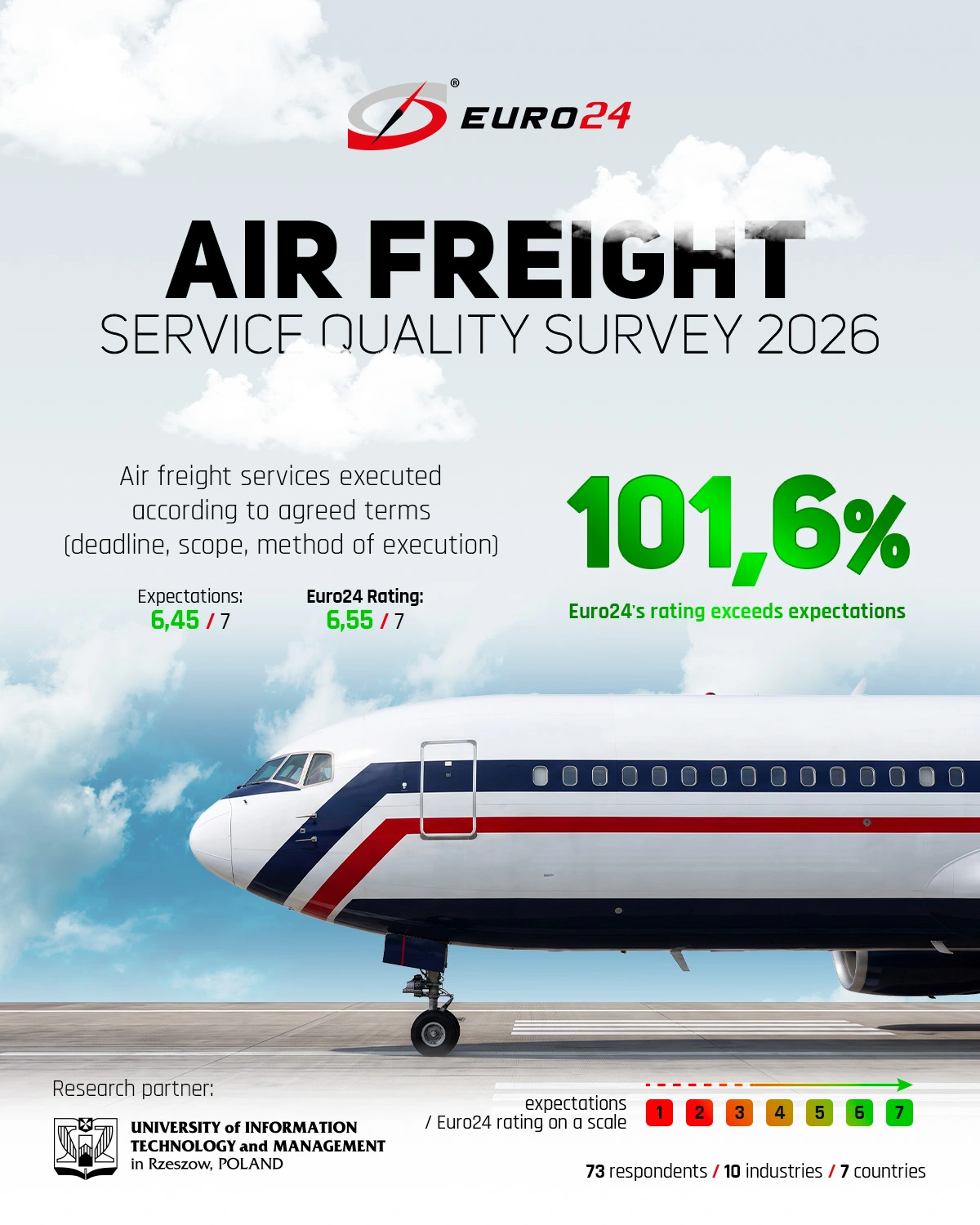
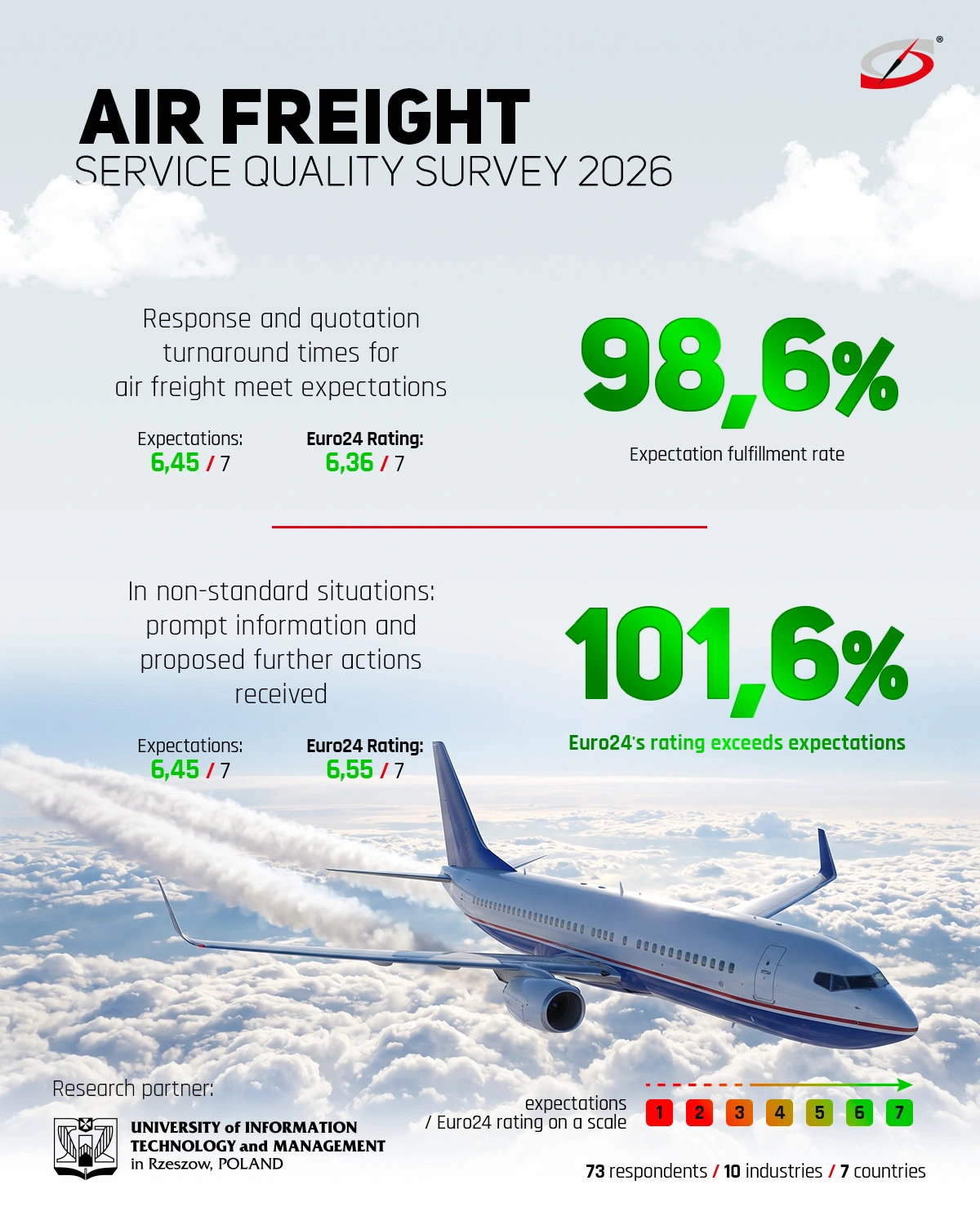
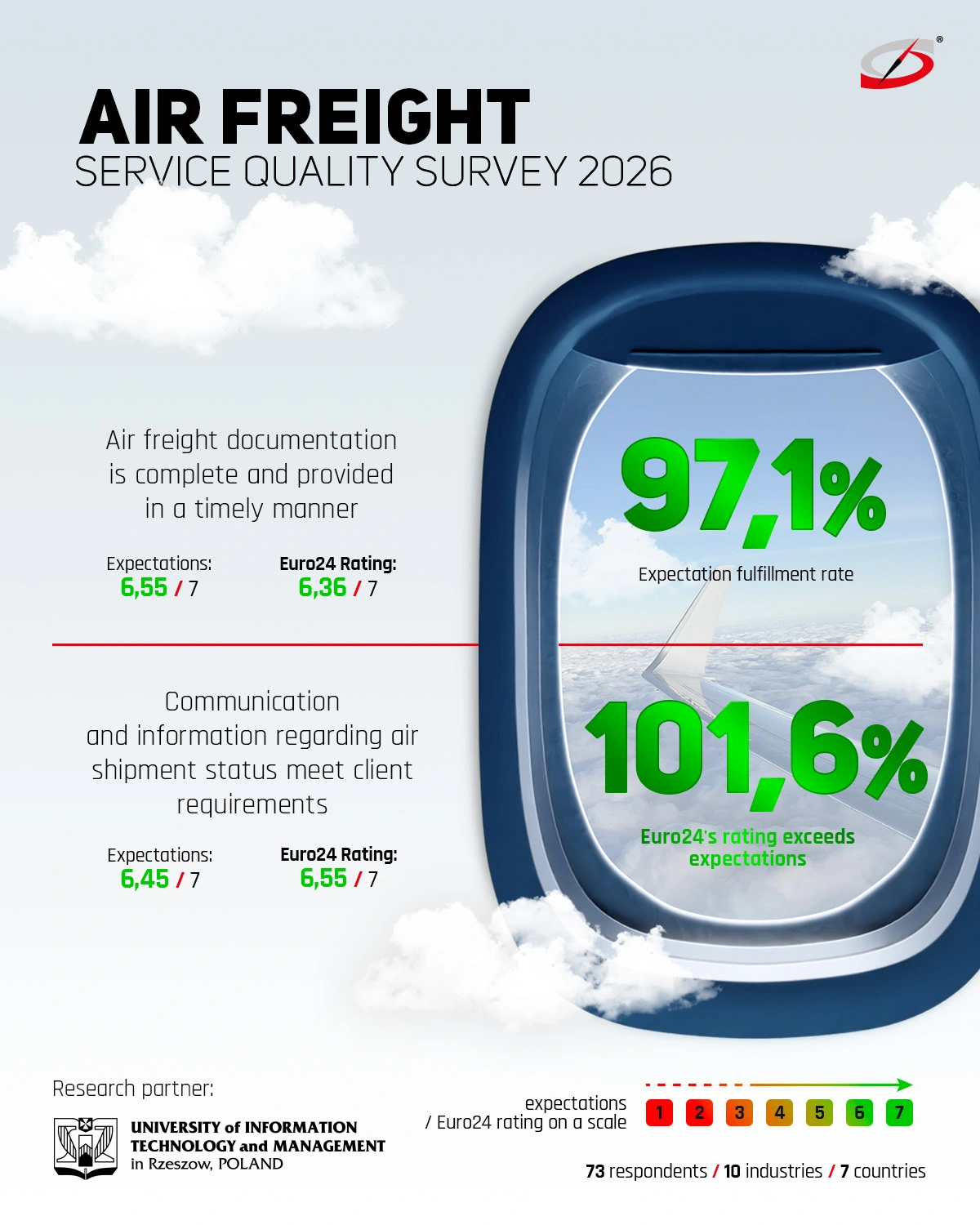
This model becomes particularly important when the transport does not go exactly according to the original plan. A flight change, schedule adjustment, handling issue, or missing documentation may require a rapid response from several parties at the same time. In such situations, the freight forwarder does more than simply communicate the change – they coordinate the next steps, update the subsequent stages of the transport, and remain in contact with the customer. This gives the customer a single point of contact, even though multiple parties may be involved in handling a single shipment. The customer does not need to know the current status of the booking, whether the handling was completed without issues, or whether the customs documentation has been accepted. They simply need to know who to contact, while the freight forwarder coordinates the rest.
Sources:
Author:

Mateusz Sekuda | Euro24 Editor
FAQ
The freight forwarder organizes transport for the customer and coordinates the entire process. The GSA represents the airline within the scope of cargo sales entrusted to it.
The GSA is primarily responsible for the commercial side of air freight and cargo space availability. The handling agent, on the other hand, is responsible for the physical handling of the shipment at the airport.
A confirmed booking means that cargo space has been reserved on a specific connection, but it does not guarantee that the shipment will be loaded onto the scheduled flight. Before departure, the cargo must arrive at the terminal before the required cut-off, be accepted by the handling agent, and meet all applicable operational, security, and, where required, customs requirements. The actual shipment parameters must also match the information provided at the time of booking, including its weight, dimensions, type of cargo, and stackability. Any discrepancies, missing required documents, late delivery to the terminal, or issues during handling may result in the cargo not being accepted for the scheduled flight.
The formalities may be handled by a customs agent acting within the scope of the authorization granted to them. The freight forwarder may coordinate this stage as part of the overall transport process.
Cut-off is the deadline by which a shipment must be delivered and handed over for handling at the airport so that it can be prepared for the scheduled flight. It is therefore not the aircraft’s departure time. The cargo must arrive at the terminal sufficiently in advance, as several operational procedures still need to be completed before departure. Once the shipment has been delivered, the handling agent must, among other things, accept the cargo, verify its parameters and documentation, and carry out the required procedures to prepare it for transport. Depending on the type of shipment and the transport route, additional security procedures or customs formalities may also be required.
The price is influenced by factors such as the route, cargo parameters, available cargo space, seasonality, demand, and market conditions. Data from 2026 shows that price trends can vary significantly between individual trade lanes.